Associated Gas-to-Power and Flare Gas Monetization for Oilfields.
Convert stranded associated gas, flare gas or separator gas into reliable field power. CIMC ENRIC integrates gas collection, conditioning, modular generation, BESS-ready controls and remote monitoring around the actual field condition.
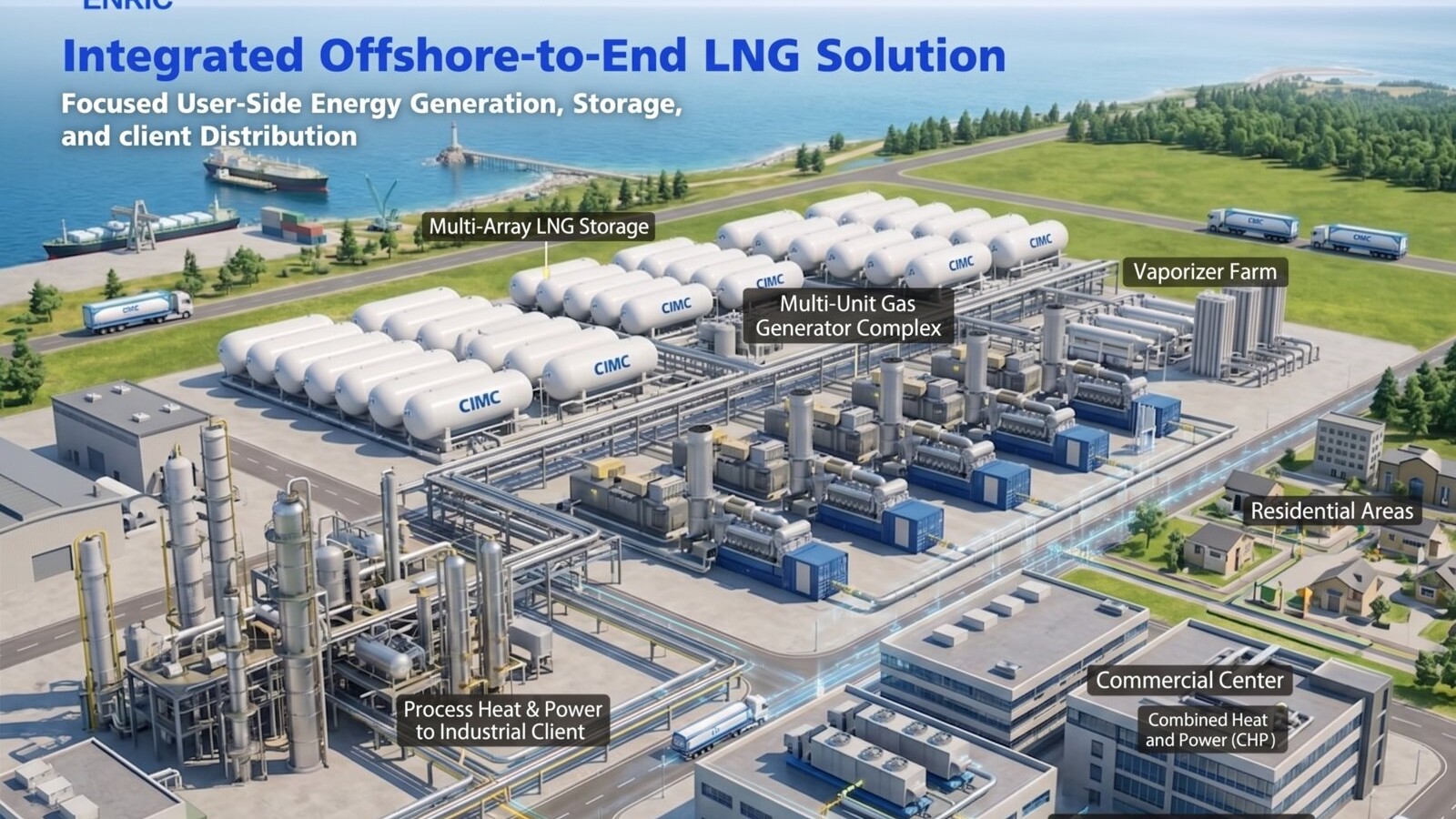
Stop paying for diesel while usable gas is being flared.
Oilfield operators often ask the same practical questions: how much power can this gas produce, what conditioning is required, and whether a modular plant can be deployed before a full gas commercialization scheme is ready.
Diesel bills are rising
Remote fuel logistics, storage and downtime risk keep increasing the cost of field power.
Flaring is becoming costly
Gas that used to be treated as waste can create compliance, disposal and lost-value exposure.
Gas remains stranded
Associated gas may be available at the separator but not yet converted into useful electricity.
CIMC route
Collect, condition and regulate gas, then convert it into modular power with PMS/SCADA and EQC support.
From associated gas source to field power asset.
The project should not start from a generator SKU. It should start from the gas source, gas stability, load profile, field layout and commercial use of the generated power.
| Step | What CIMC checks |
|---|---|
| Gas source | Separator gas, flare gas, pipeline gas, gas pressure, flow stability and composition. |
| Conditioning | Filtration, liquid removal, pressure regulation, metering, safety shut-off and engine inlet pressure. |
| Generation | Modular gas gensets, synchronization, 400V/11kV output route and N+1 philosophy. |
| Operation | PMS/SCADA, BESS-ready dispatch, remote monitoring, maintenance and phased expansion. |
MMSCFD to MW screening
Use this for first-pass project thinking. It is not a performance guarantee.
Modular routes for flare gas, separator gas and marginal fields.
Start small, prove performance, then scale based on gas availability and power demand.
500 kW - 1 MW pilot
Initial field power, diesel displacement and gas utilization proof.
1 MW - 5 MW expansion
Production loads, camps, pumping, BESS charging and local industrial users.
5 MW - 25 MW cluster
Multi-well or multi-field power hub with 11kV export, PMS/SCADA and remote O&M.
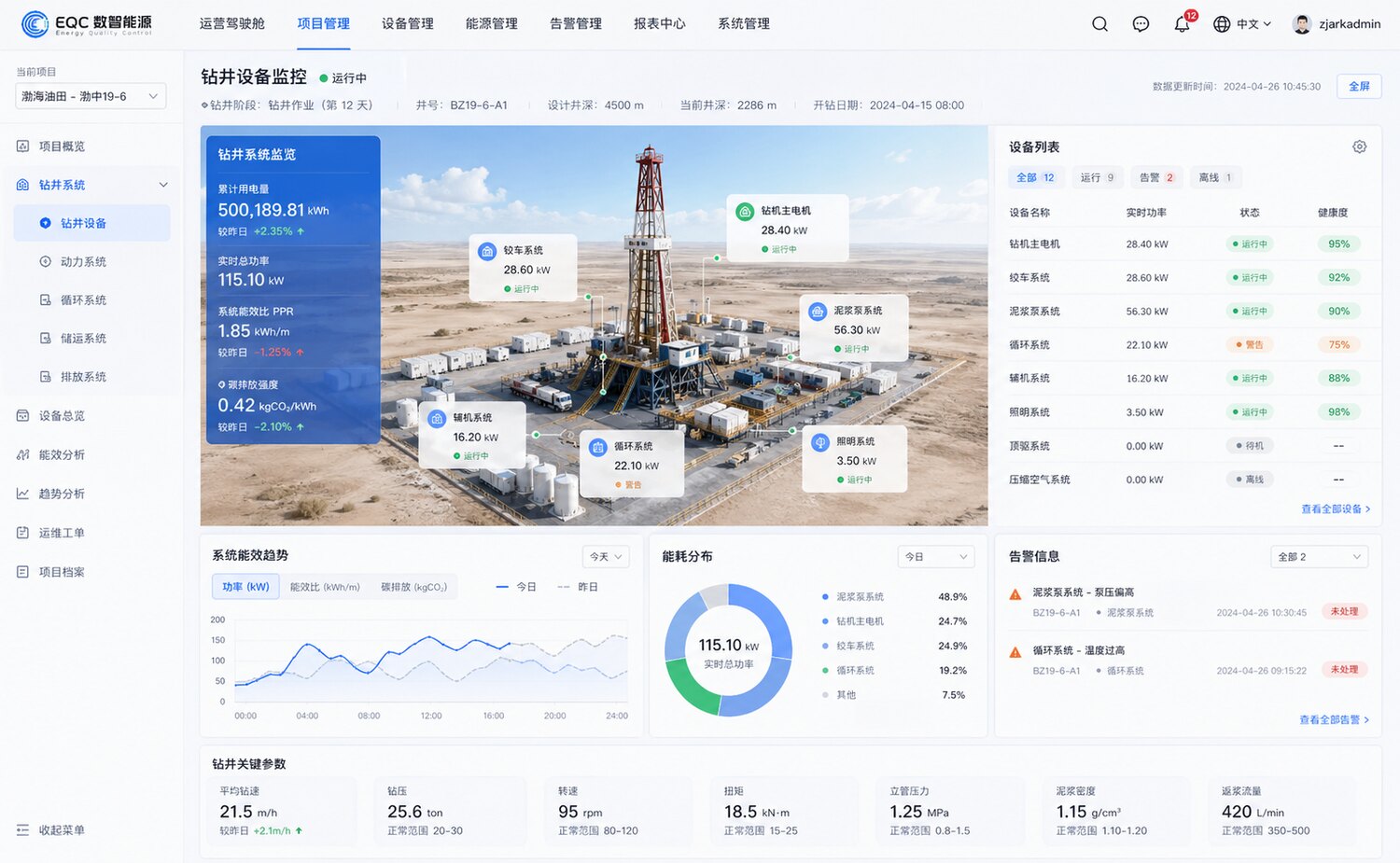
EQC turns a gas engine cluster into a controllable asset.
For associated gas projects, the operating layer matters: remote start-stop visibility, alarm handling, gas consumption trend, engine performance, maintenance planning and dispatch sequence.
Questions customers ask before sending gas data.
What is associated gas-to-power?
Associated gas-to-power converts gas produced with crude oil into electricity near the field. The system usually includes gas collection, conditioning, pressure regulation, modular gas generation, electrical distribution, controls and remote monitoring.
How much power can 1 MMSCFD of associated gas generate?
For early screening, 1 MMSCFD of typical natural gas can often support roughly 4.0 to 4.7 MW net electrical output after engine efficiency, auxiliary load and site derating. Final output depends on LHV, methane number, pressure, CO2, H2S, water content and ambient conditions.
What gas data should an oilfield operator provide?
Useful inputs include gas flow rate, pressure range, full gas composition, LHV or HHV, methane number, H2S, CO2, water dew point, condensate risk, current flare or venting practice, load profile and target output voltage.
Can wet or low-pressure associated gas be used?
It may be possible, but the project needs conditioning and pressure stabilization. FEED should verify liquids removal, filtration, pressure regulation, safety shut-off, engine inlet pressure and corrosion risk before equipment selection.
Is associated gas-to-power only for oilfield self-use?
No. It can support drilling loads, production pumps, camps, BESS charging, embedded industrial users, local distribution nodes or future LNG/CNG monetization where the commercial structure allows.
Why use modular gas engines instead of one large machine?
Modular engines allow staged deployment, N+1 redundancy, easier maintenance, flexible part-load operation and replication across fields. This is often more practical for 500 kW to 25 MW oilfield and flare gas projects.
Send the gas source and target load.
We can prepare the first route when you share gas flow, gas quality, pressure, load profile, site condition and target voltage. The goal is a route decision, not just a product quote.
Useful attachments
- Gas composition report and pressure range.
- Current flare volume or separator gas estimate.
- Diesel consumption and load profile.
- Target power demand and output voltage.
- Site location, access and expected timeline.
Market context sources: World Bank Global Gas Flaring Data, Nigeria Gas Flare Commercialisation Programme, and IEA Africa Energy Outlook.