More units.
More field experience.
This is the start of a new product’s field deployment. Follow this page for further site deployments and measured operating updates as they become available.
Discuss an AM20 rollout →The first AM20 LNG power package is now at the telecom project site, starting a new phase of on-site testing and deployment. Further units are planned to follow, building field experience around integrated fuel storage, gas preparation, controls and generation.

The first unit is on site and initial testing and deployment are beginning. Further units are planned; commissioning and operating results will be added as the fieldwork progresses.
The first AM20 unit is on site, with initial testing and deployment now beginning. Additional units are planned to follow as the rollout progresses.
Transport, delivery and unpacking are documented in the field photographs.
Site checks and deployment work are beginning around the first AM20 package.
Further unit deployments and operating updates will be added as the rollout progresses.
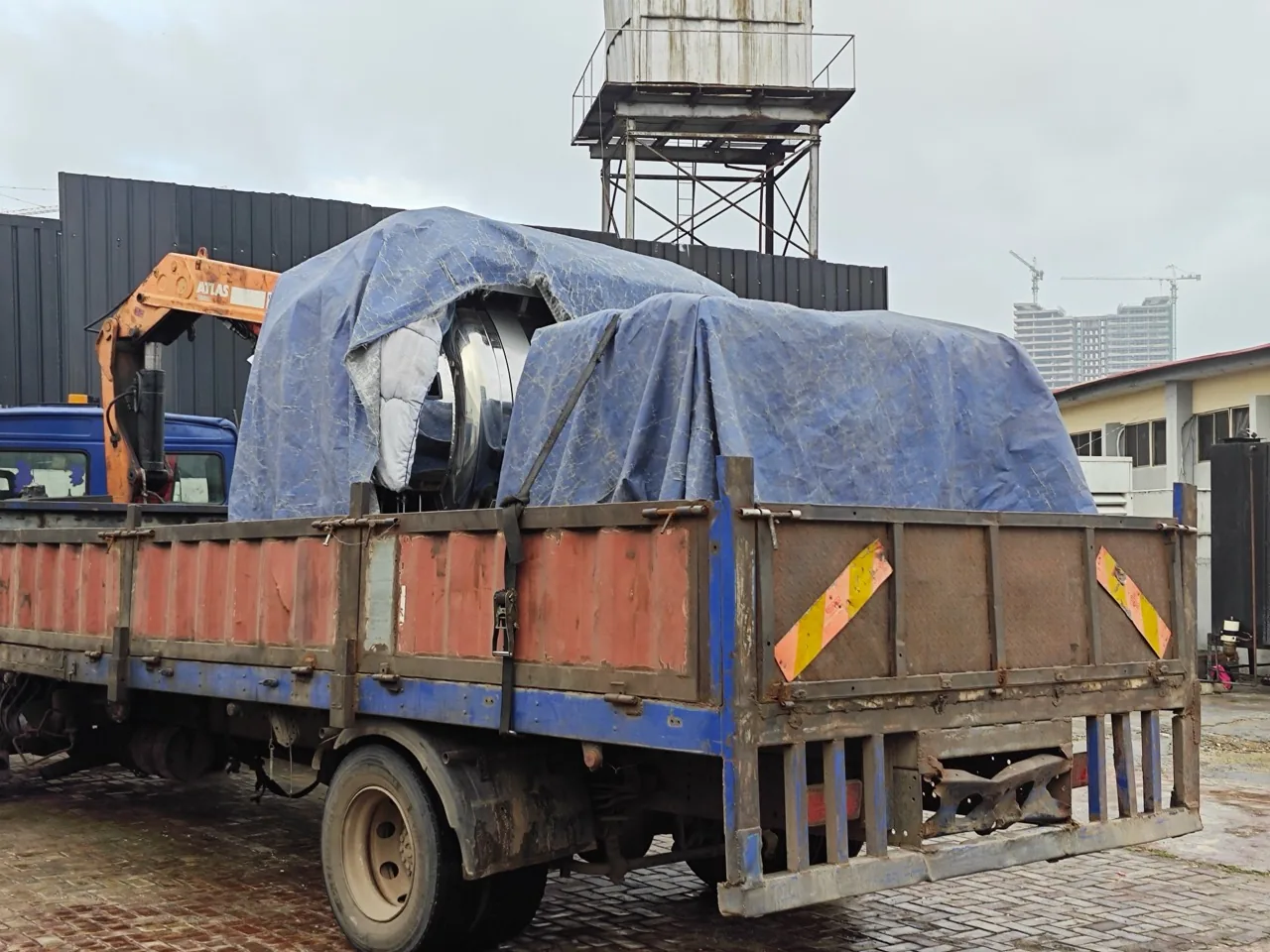
The AM20 package on the delivery truck.
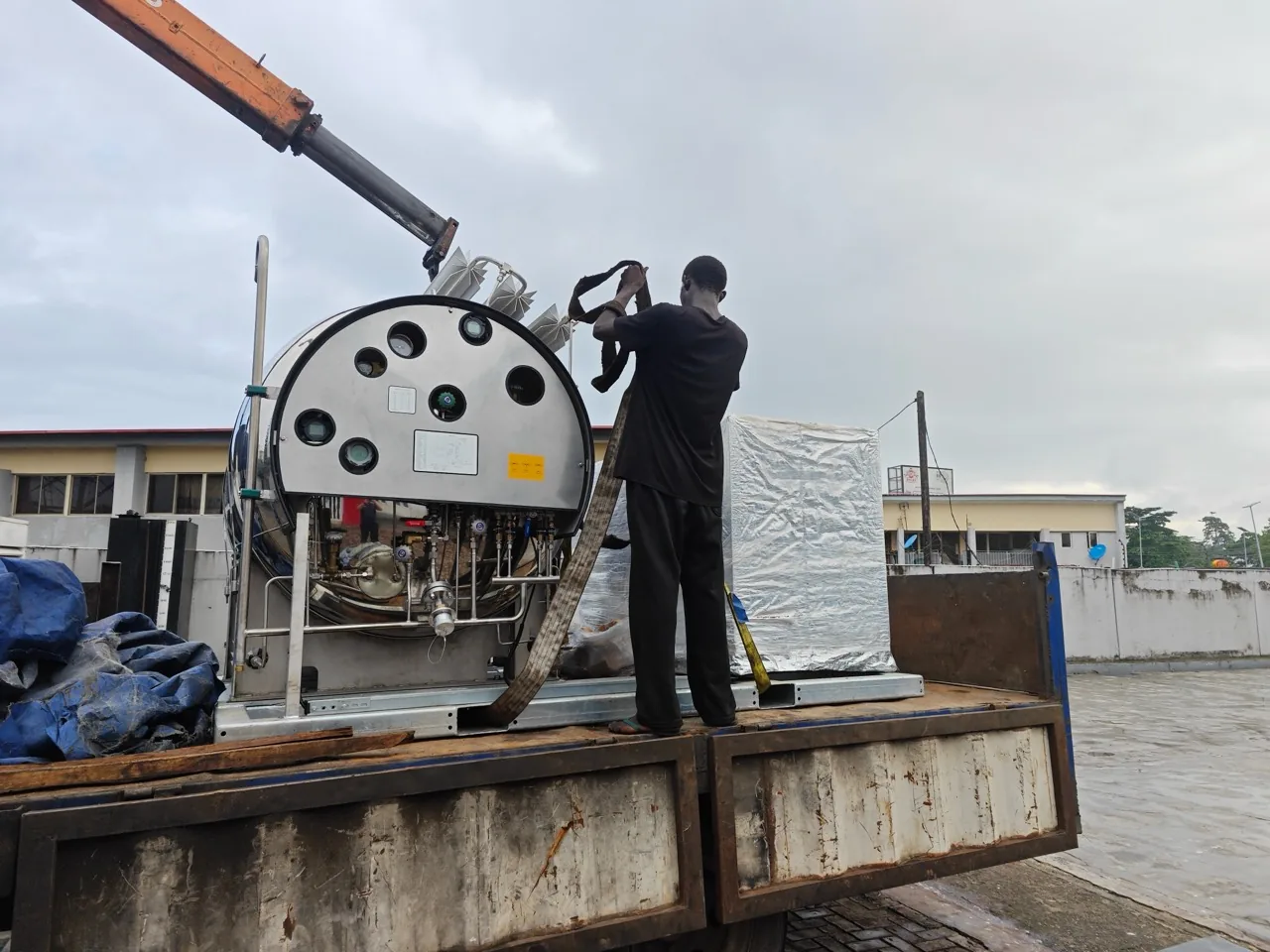
Handling the AM20 package during delivery to site.
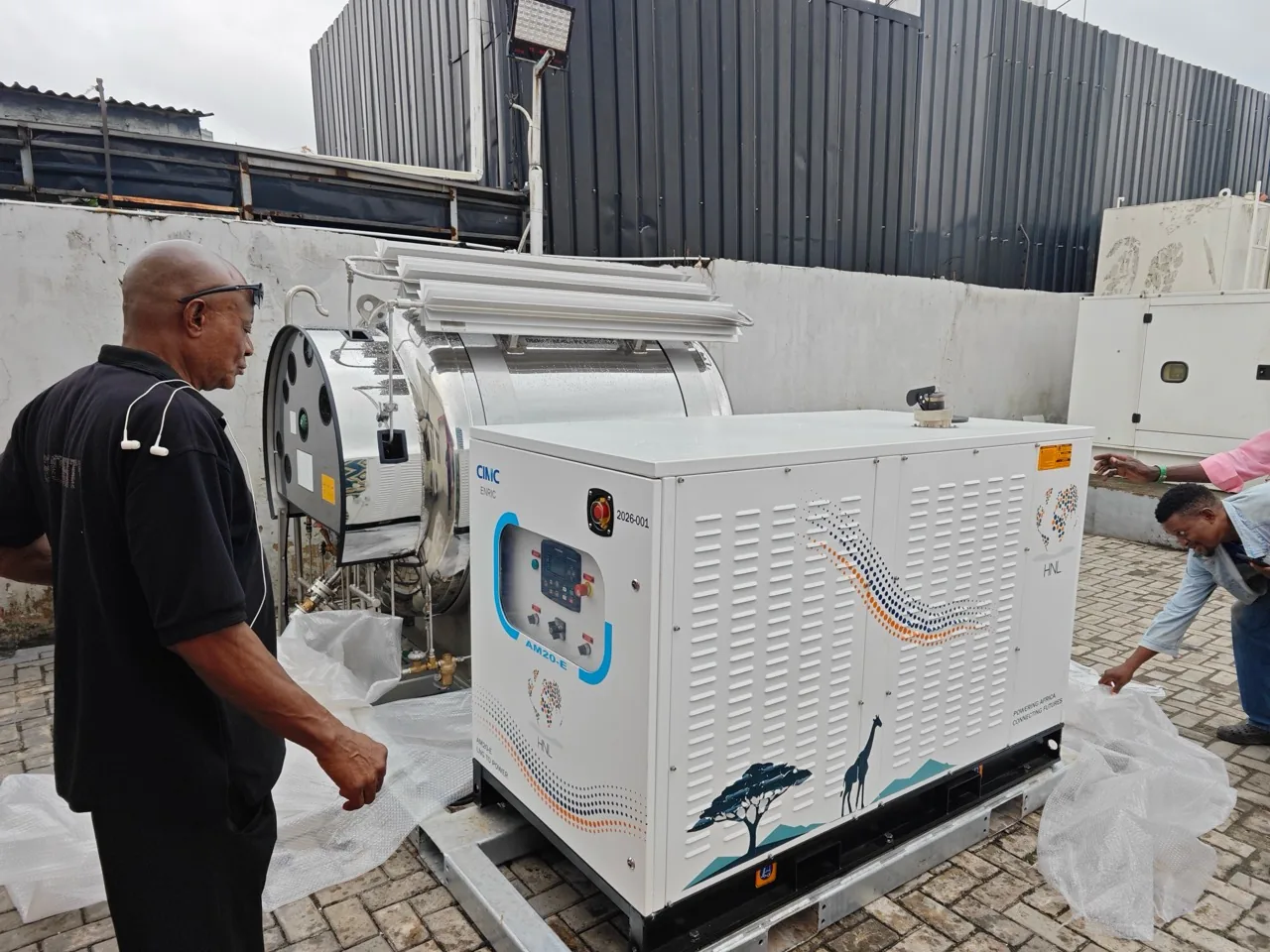
Unpacking and checking the package at site.
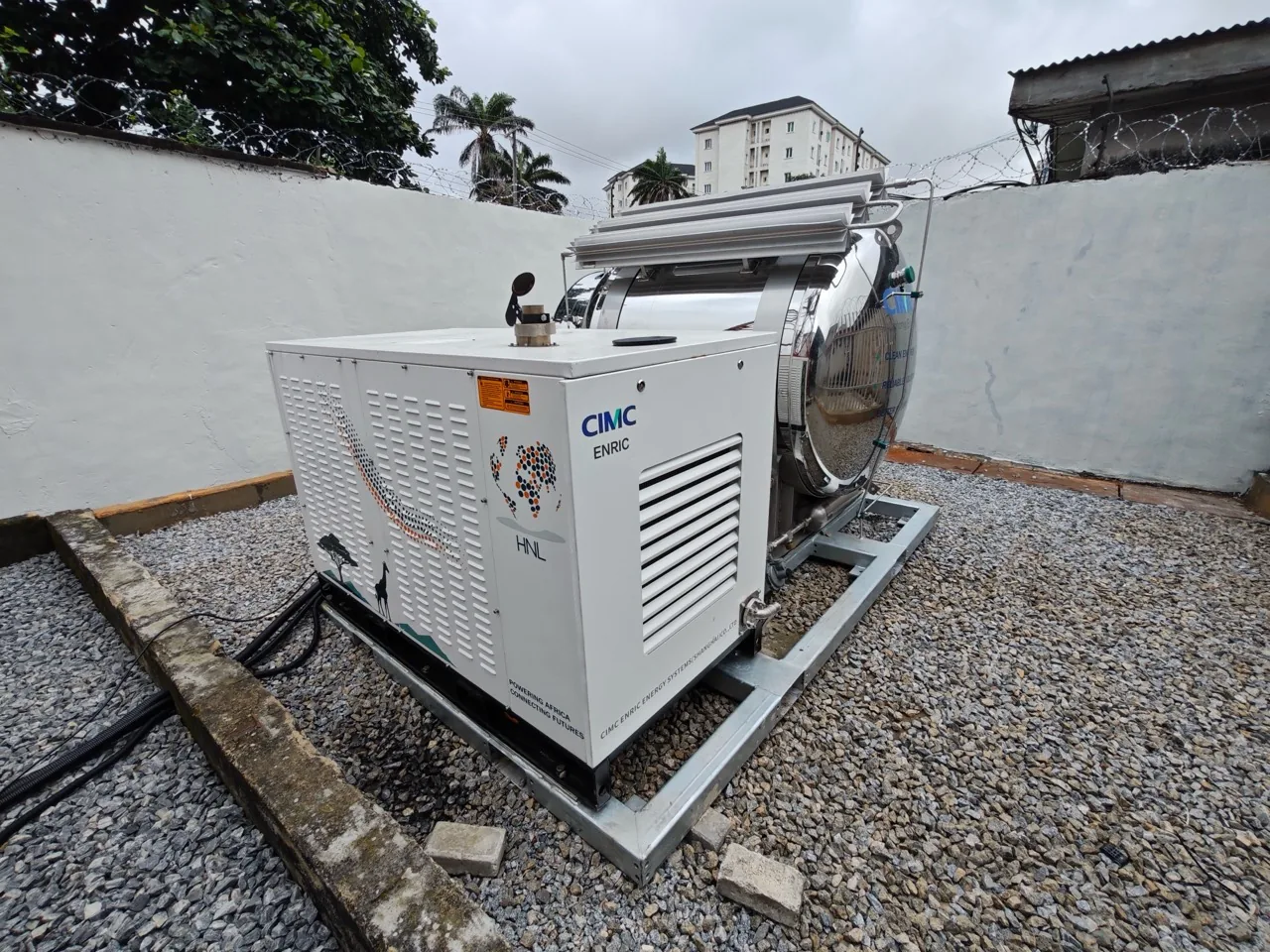
AM20 LNG-to-power package positioned at site.
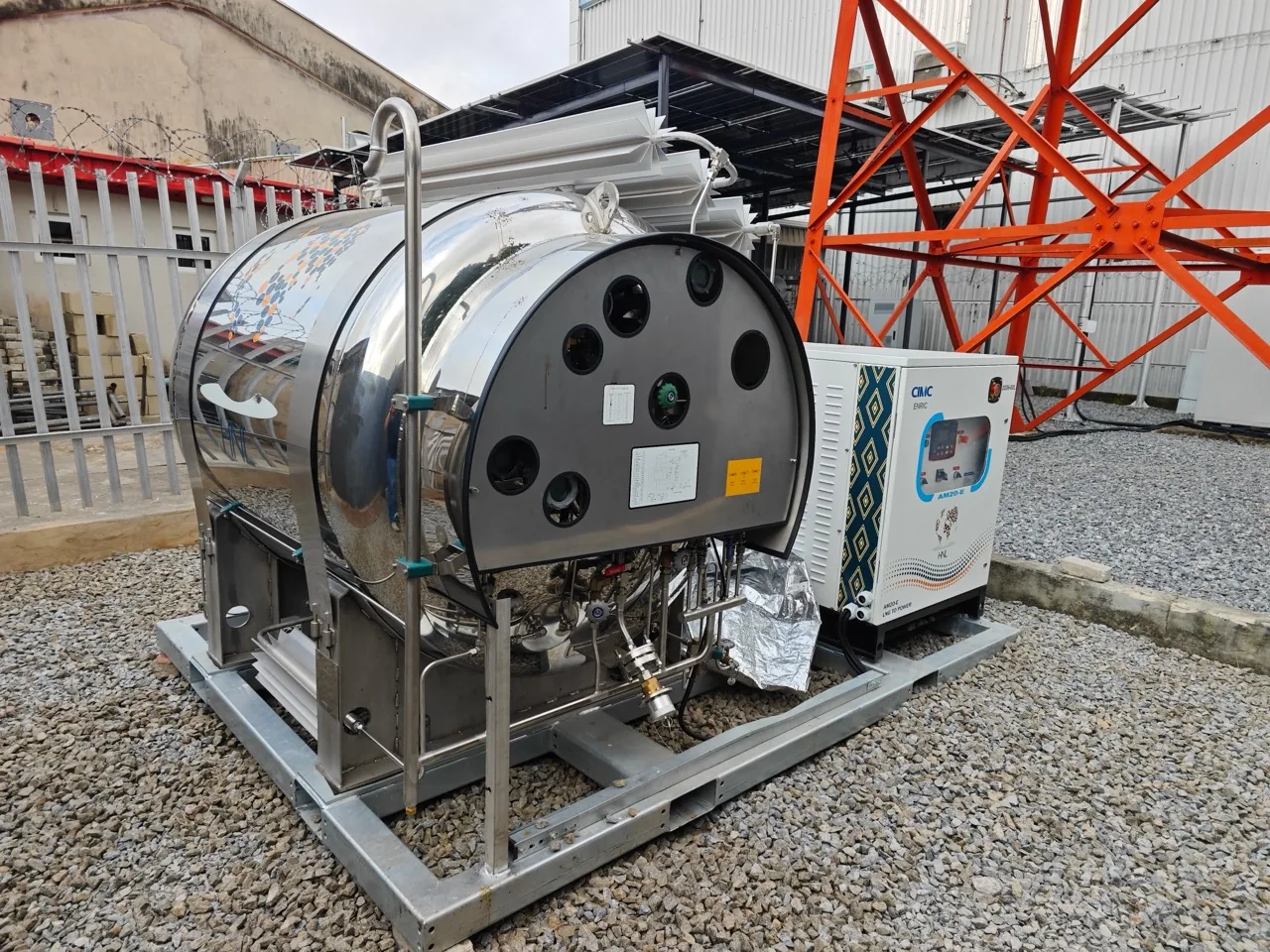
LNG storage, vaporization and gas preparation equipment on the AM20 skid.
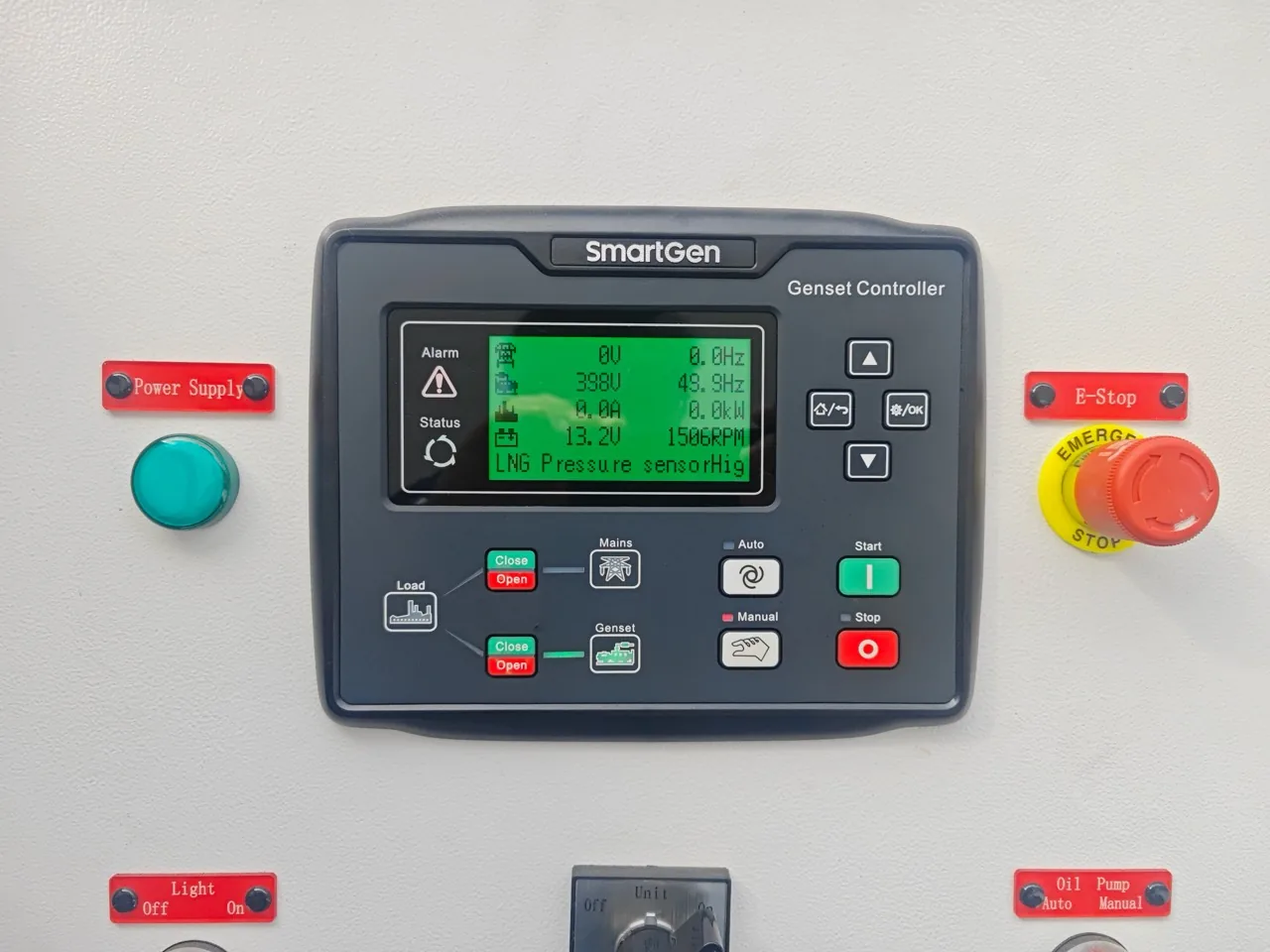
Controller interface during on-site checks. Displayed readings and messages reflect that moment, rather than an acceptance-test result.
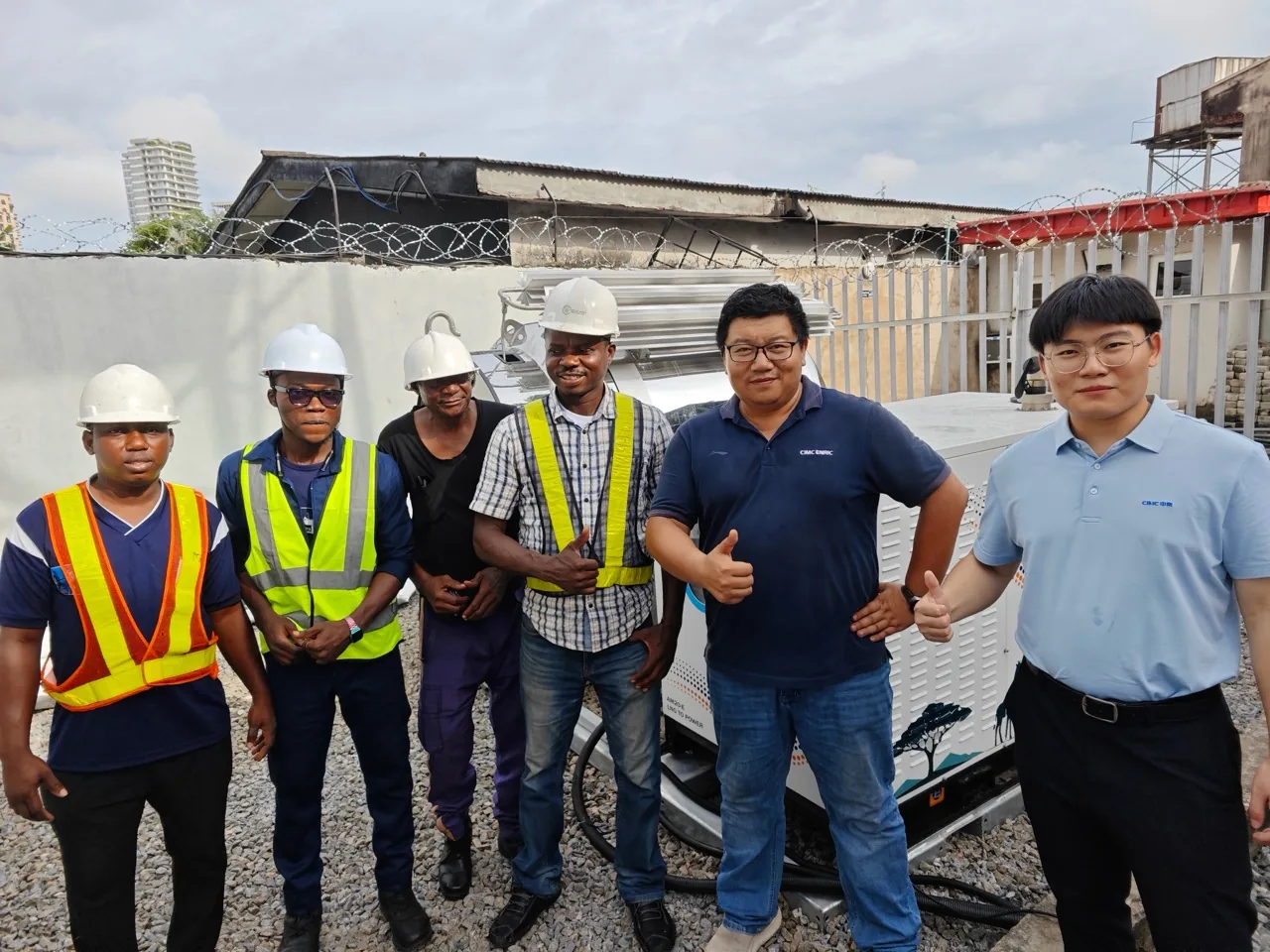
The site team with the AM20 package during the deployment stage.
This is the start of a new product’s field deployment. Follow this page for further site deployments and measured operating updates as they become available.
Discuss an AM20 rollout →Current milestone: initial on-site testing and deployment. Operating performance and acceptance results will be reported when available. Select any photograph to view the larger image.
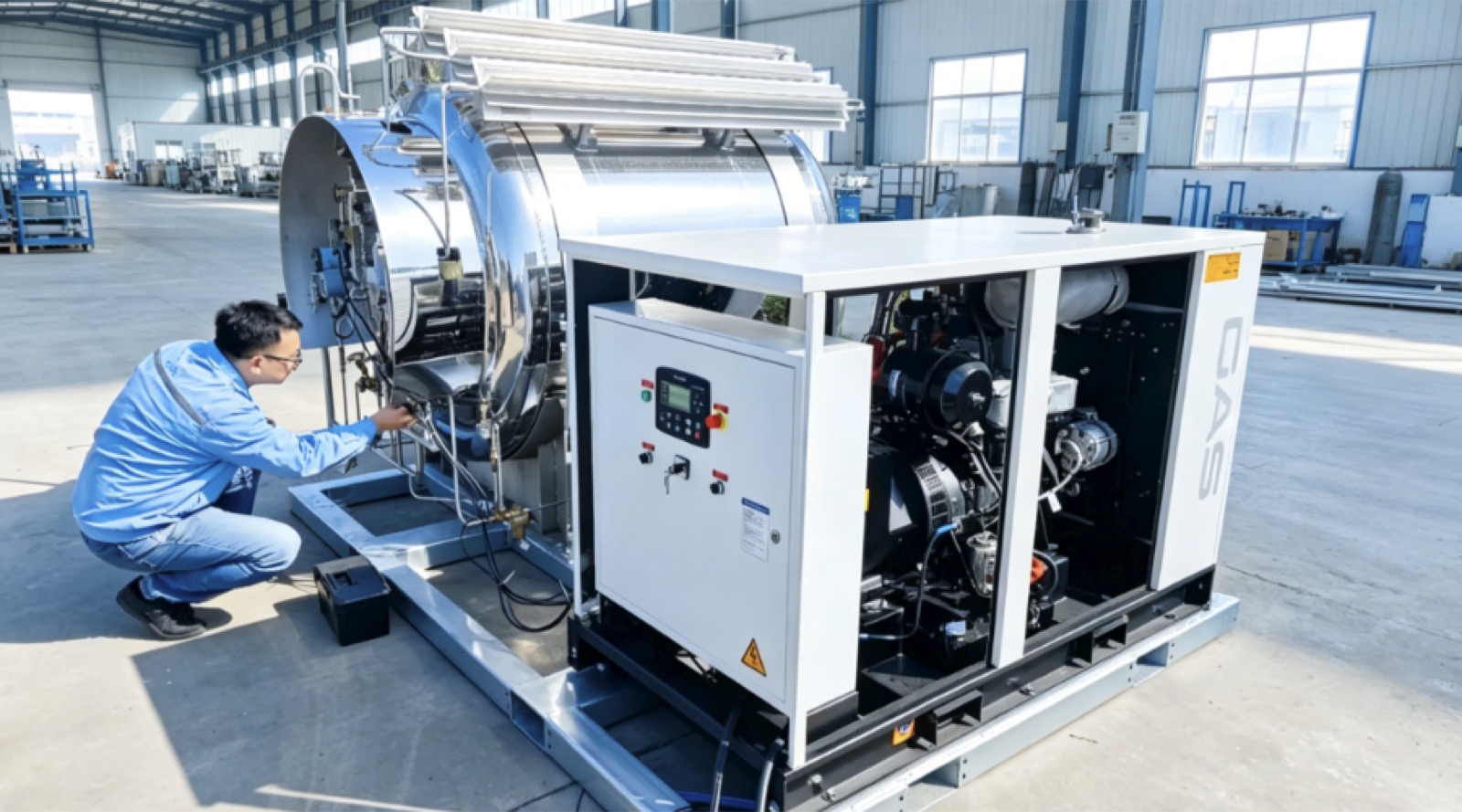
This real image shows the integrated AM20 LNG skid during factory acceptance and pre-delivery inspection. It helps customers see the actual equipment arrangement, service access and quality-control stage before site deployment.
The package integrates LNG storage, vaporization, pressure regulation, controls and gas generation in one compact skid for rapid field installation.
In many African weak-grid markets, diesel backup has become a daily operating system instead of emergency support. Fuel price volatility, theft risk, repeated service visits and grid outages push tower operators to look for a cleaner and more controllable route.
LNG is stored in a sealed pressure system and is not easily siphoned or resold like diesel, reducing the core incentive for fuel theft.
Cleaner combustion and a 4000-hour maintenance interval help reduce field visits compared with diesel-heavy operation.
The integrated skid uses LNG storage, vaporization, pressure regulation and gas generation in one compact package for tower sites.
The table below summarizes the engineering-reviewed AM20 LNG technical parameters. Final deployment depends on site load, ambient conditions, noise requirements and fuel logistics.
| System model | AM20 LNG micro power station |
|---|---|
| Structure | Integrated open skid-mounted unit; rapid deployment and plug-and-play operation |
| Rated / standby power | 20 kW / 22 kW |
| Rated voltage | 400 V, three-phase five-wire system |
| Rated frequency | 50 Hz |
| Fuel route | LNG vaporized and pressure-regulated to natural gas for the genset |
| Rated gas consumption | Approx. 7 Nm3/h |
| Fuel gas pressure | 1.8-3 kPa |
| Methane content | >80% recommended |
| LNG tank volume | 2000 L (gross) |
| LNG tank working pressure | 0.8 MPa |
| Generation efficiency | Approx. 33% |
| Maintenance interval | 4000 hours for first maintenance cycle under normal operation |
| Dimensions | 2950 x 1900 x 2360 mm |
| Total mass | ≤2850 kg |
| Control and monitoring | Automatic control, manual emergency operation and RS485 interface |

This calculator is for first-pass discussion with tower owners, energy service companies and telecom operators. It compares fuel cost per kWh only.
The signed project is a practical entry point. After the first tower validates uptime, refueling interval and service model, the same AM20 LNG approach can be replicated across tower clusters with local LNG supply routes.
Load profile, outage hours, diesel usage and theft risk.
LNG source, refill rhythm and storage safety.
Monitor kWh, fuel consumption, maintenance and uptime.
Replicate to more sites with standardized service and logistics.
Share diesel price, tower load, outage hours, fuel theft exposure and local LNG supply conditions. CIMC ENRIC can build the ROI route for a pilot or cluster rollout.