
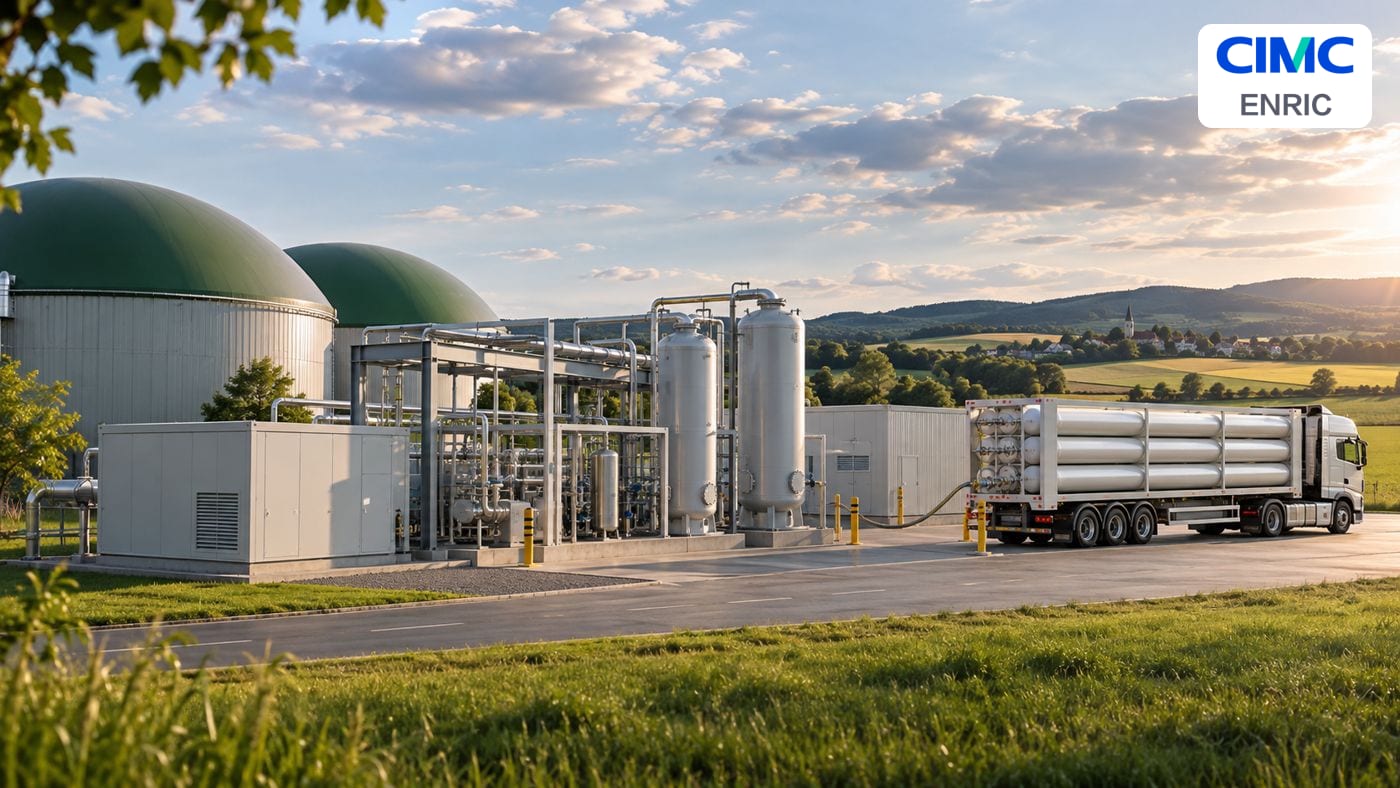
For: Biomethane producers, network operators and EPCs
The receiving network operator’s applicable specification is the starting point. Agree gas quality, pressure, flow, metering, sampling, monitoring and rejection procedures at the proposed point of injection before finalizing compression, transport or an upgrading package.
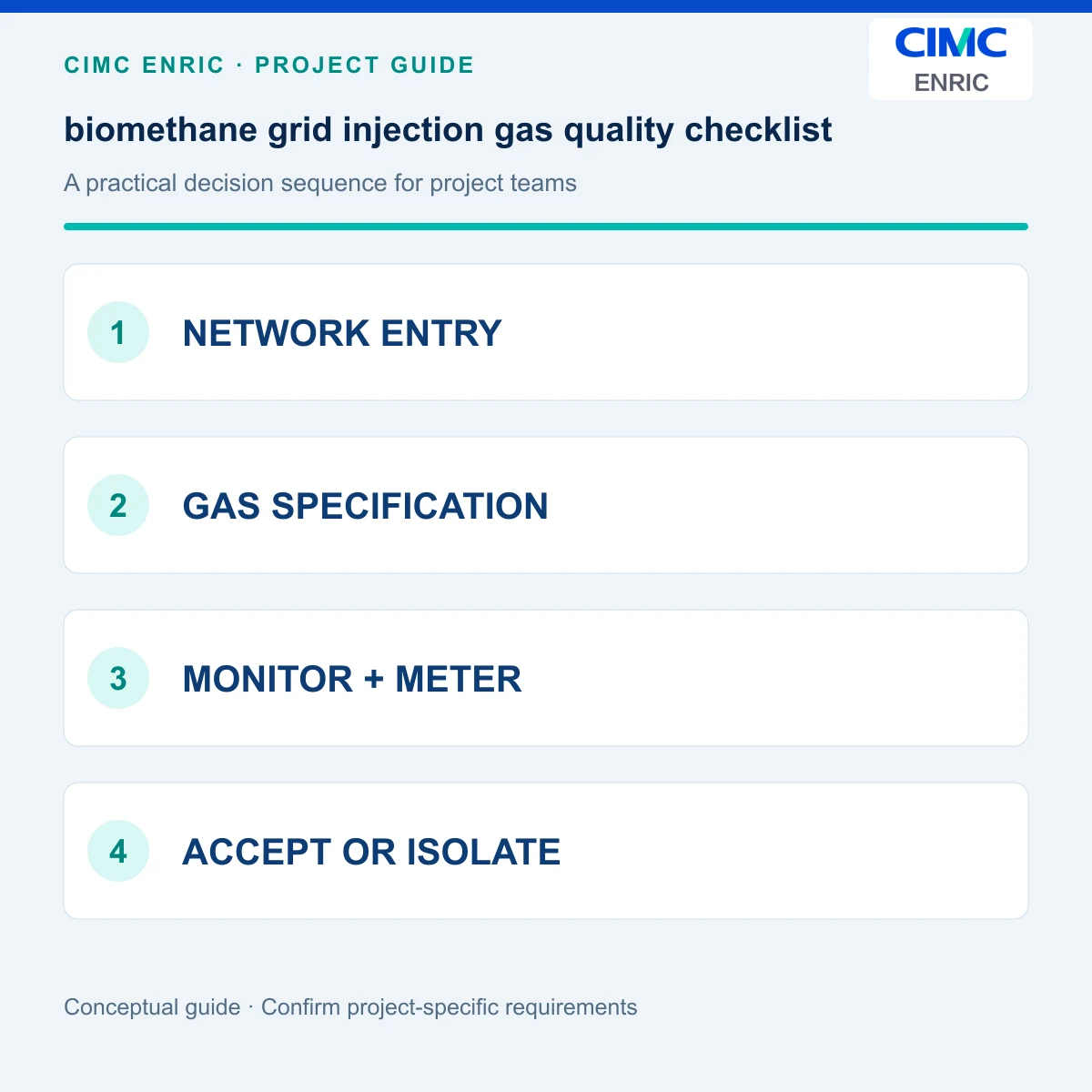
Identify the receiving operator and boundary
Confirm the specific network, location, operator, operating pressure range, available acceptance capacity and requested commissioning date. Ask whether acceptance varies seasonally or during low demand. A nearby pipeline on a map is not necessarily a suitable injection point.
Draw the equipment and ownership boundaries: producer outlet, upgrading, compression, transport if relevant, receiving station and network entry. Clarify who operates and maintains each section and how outages are communicated.
Request the applicable gas-quality specification
Obtain written project requirements and analytical methods from the receiving operator. Depending on jurisdiction and equipment, relevant parameters can include heating value or Wobbe index, methane content, moisture or dew point, oxygen, sulfur compounds, carbon dioxide, siloxanes and other contaminants. Do not substitute a generic European number for the actual contract.
Agree sampling points, frequency, calibration, data access and the action taken for out-of-specification gas. The vendor must design treatment against the raw feed and the specified limits; raw biogas variability is a key input.
Connect physical delivery with documented attributes
Physical gas quality and sustainability or origin claims are distinct workstreams. Identify which scheme, chain-of-custody evidence, metering and records the buyer and applicable authorities require for the intended use. Requirements vary by market, feedstock and certification scheme.
Vehicle transport does not by itself establish renewable status or a transferable certificate. Likewise, meeting a certificate requirement does not remove the need to meet the network’s physical entry specification.
Test the handover before procurement closes
Prepare a cause-and-effect matrix for high or low pressure, quality excursions, communication failures, power loss and receiving-point shutdown. Allocate isolation, storage, diversion, restart, records and notification between the responsible operators.
Include testing and commissioning responsibilities, acceptance criteria, planned maintenance, spare parts and the process for changes in gas quality. A road-delivery option and a direct pipeline may share a grid interface but need different transport and unloading procedures.
Questions buyers ask
Is biomethane specification identical across Europe?
No universal value should be assumed. Confirm the current rules, contract and receiving operator requirements for the location.
Can gas be injected whenever the producer is running?
Only within the agreed network acceptance, quality, pressure, flow and operating conditions.
Prepare a project brief
Receiving operator and point; inlet specification; raw gas analysis; flow and pressure profiles; sampling plan; metering; rejection controls; attribute documentation; permits; handover responsibility.
Explore related CIMC solutions · Read the related project guide · Discuss your project
Source: European Commission: biomethane and safe grid injection. The cited material provides context; project decisions require current site-specific engineering and applicable requirements.