
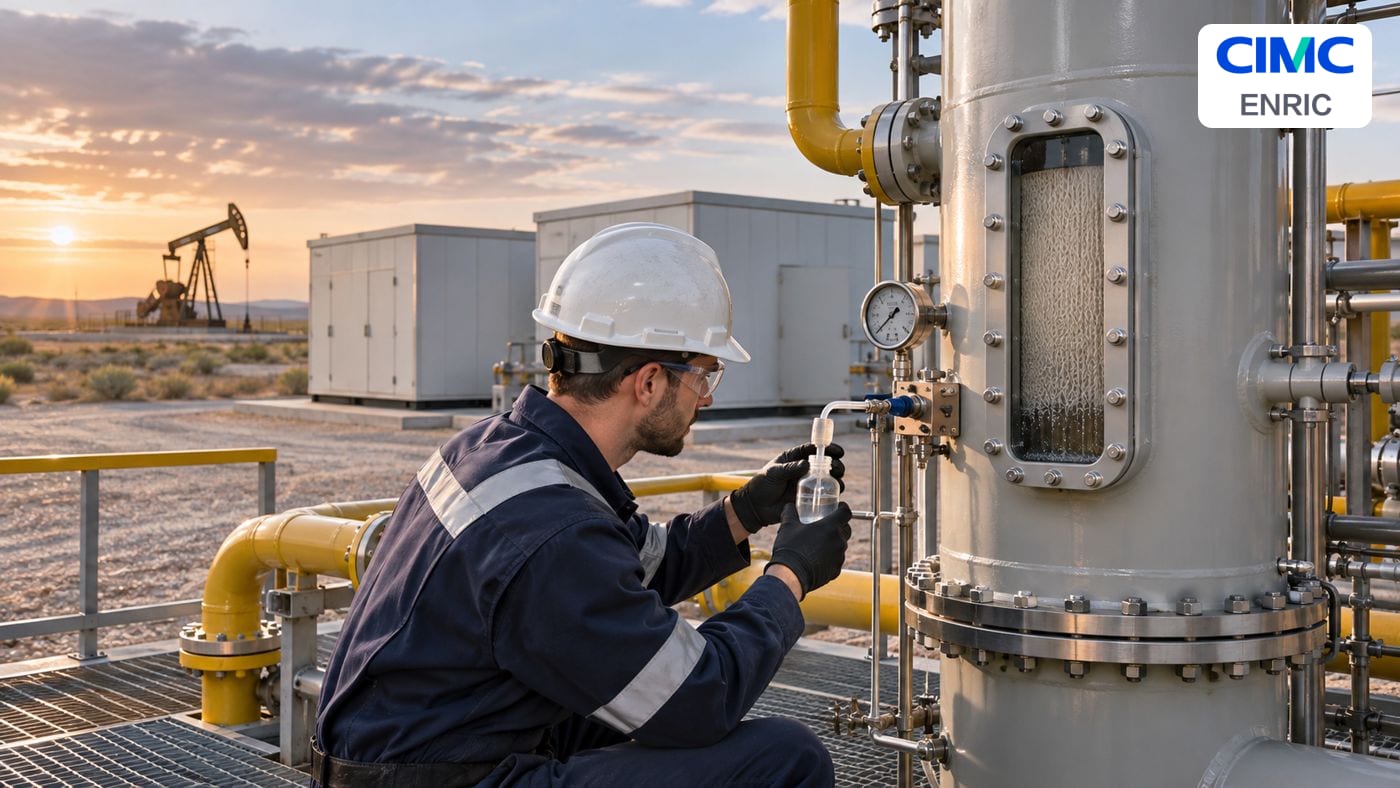
For: Oilfield operators, gas processors and power-system EPCs
Treatment follows the raw gas analysis and the selected engine’s inlet limits. A project may need liquid separation, filtration, pressure control, drying, contaminant removal or gas blending, but the correct train cannot be selected from the label “associated gas” alone.
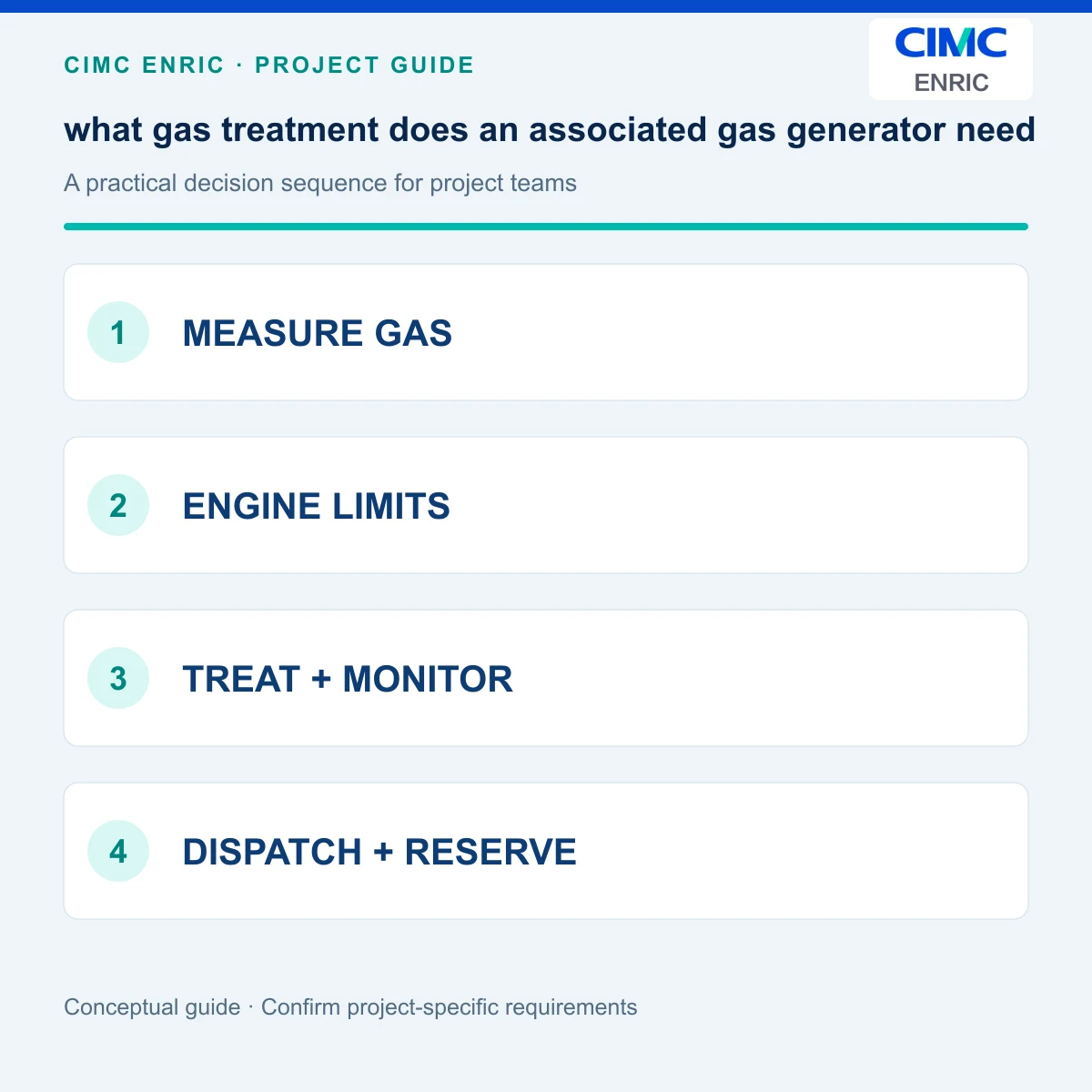
Sample the actual operating range
Obtain a representative gas composition, heating value and variation over time. Measure inlet pressure and temperature, flow profile, liquid carryover, particulates, water content and contaminants the engine vendor identifies as relevant. Capture start-up and changing well conditions, not only the best laboratory result.
Confirm whether the report is on wet or dry basis, the measurement units and sampling location. A wellhead sample does not automatically describe gas at the engine boundary after compression, cooling or a long pipeline.
Translate analysis into an engine inlet envelope
Request the selected engine’s approved limits and test methods for gas quality, pressure, temperature and contaminants. Low or variable heating value can affect available power or controls; the supplier must confirm any derating. Pressure that is adequate on average can fall outside the operating range during a demand step.
Define what happens to out-of-specification gas. Automatic isolation, alarm, diversion or another approved response must be designed with the gas and safety systems; avoid assuming a generator can simply consume every fluctuation.
Build treatment in functional blocks
Depending on the report, a train can include inlet separation for free liquids, particulate filtration, moisture control, compression or regulation, and contaminant removal. H₂S treatment, for example, depends on measured concentration and the downstream limits. Liquid handling and disposal are part of the scope.
Monitoring and sampling should verify performance at the contractual package boundary. Define filter replacement, media consumption, condensate disposal and access for maintenance. Do not specify a technology or removal efficiency without the vendor’s duty calculation.
Design the power and gas system together
Compare the available gas profile against generation dispatch, start-up consumption, storage or buffering, and required backup fuel. Gas continuity and electricity demand are linked: a generator nameplate is not a guarantee that the field can sustain that output.
A realistic package specification identifies the owner of upstream gas, treatment and quality monitoring, the engine inlet boundary, trip limits and response to interruptions. Environmental claims require actual site and lifecycle evidence.
Questions buyers ask
Can untreated associated gas always run a natural-gas engine?
No. Composition, contaminants, pressure and variability must be compared with the approved limits of the selected engine.
Does a higher methane percentage guarantee usable gas?
No. Moisture, sulfur compounds, liquids, pressure and variation can still be decisive.
Prepare a project brief
Wet/dry gas analysis; heating value; pressure and temperature range; min/normal/max flow; liquids and contaminants; gas-supply availability; engine inlet limits; load profile; handling responsibilities.
Explore related CIMC solutions · Read the related project guide · Discuss your project
Source: US EPA: gas treatment and changing composition. The cited material provides context; project decisions require current site-specific engineering and applicable requirements.