
CIMC ENRIC Energy Systems · Energy Guides · Oilfield operators, mining projects and EPC teams
Associated gas can be a fuel for a suitably selected gas generator. A usable project depends on the gas delivered to the engine: its composition, contaminants, pressure, flow and variation must fit the selected equipment. Start with a representative gas report and the site's electricity demand, then define conditioning, generation and acceptance together.
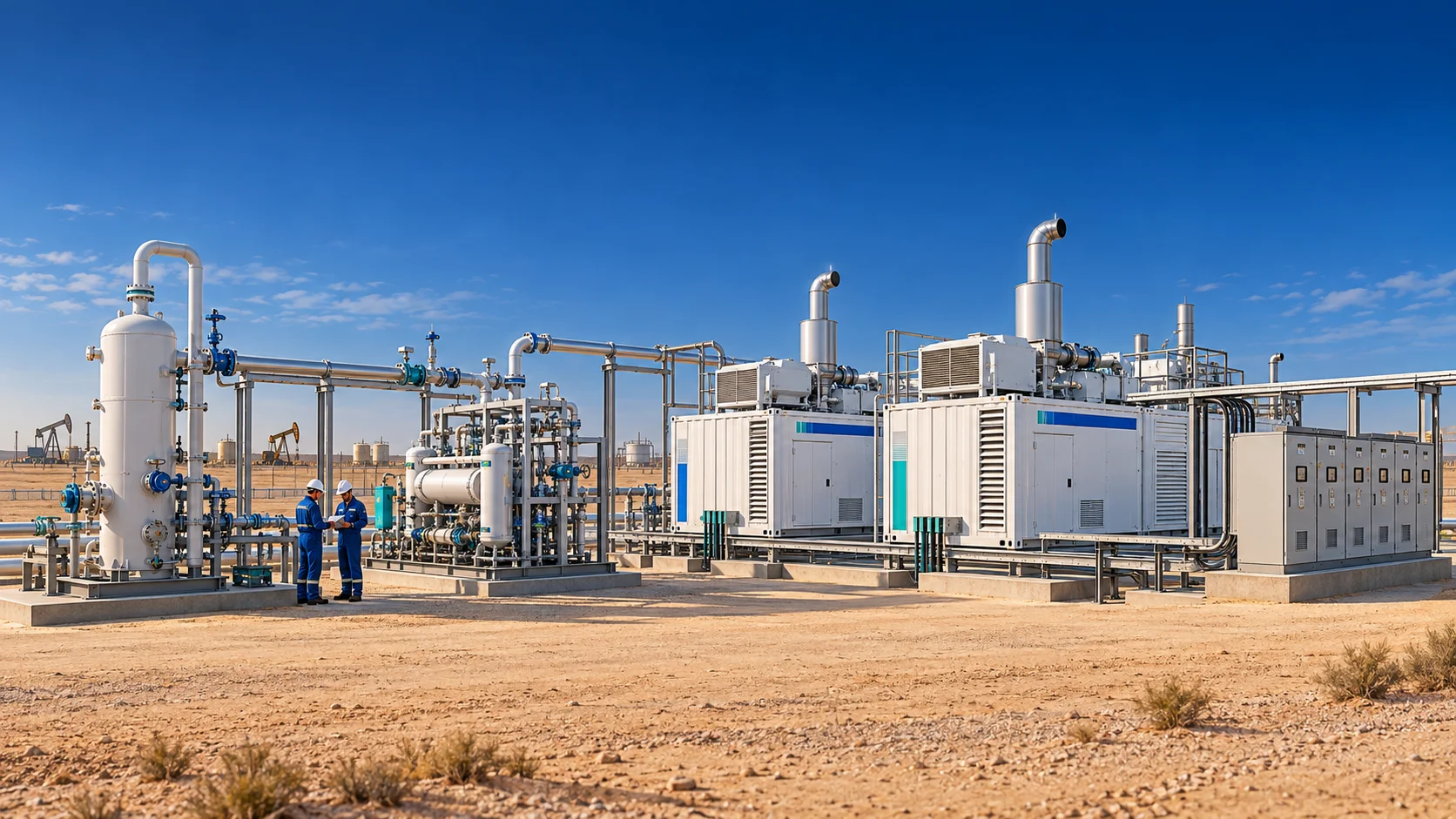
1. Start with the gas you actually have
An oilfield may have gas available while lacking the information needed to specify a power package. “Natural gas” on a project brief does not establish the engine inlet conditions. Associated gas can differ from processed pipeline fuel, including variations in composition, so the engine's fuel limits need to be confirmed before the gas is counted as usable.
Our suggested first discussion joins three records: the gas source, the proposed electrical loads and the operating duty. Keep each gas stream identifiable before evaluating a blend. Record where and when samples were taken, which operating condition they represent and whether the composition has changed. A single convenient sample should not become an unqualified guarantee for future operation.
For mine operators, identify whether the fuel is a purchased supply or recovered mine gas. An oilfield fuel specification should not be copied into a mine project without a separate assessment.
2. Methane percentage is only one input
Methane number describes resistance to knocking; it is not the same measurement as methane concentration. Heating value, gas composition and contaminants need separate review. A gas analysis matters because it separates heating value, knock resistance and harmful constituents. [1]
Ask for the laboratory results and their units, rather than a verbal description such as “clean gas”. The following is our project-input checklist, not an engine's acceptance specification:
| Information to bring | What the project team should resolve |
|---|---|
| Full composition, including heavier hydrocarbons, CO₂, N₂ and other reported constituents | Fuel properties and the candidate engine's review basis |
| Heating value and its reference conditions | Comparable energy and consumption estimates; distinguish LHV from HHV |
| H₂S, total sulfur and other relevant contaminants | Required treatment, materials and maintenance conditions |
| Water and hydrocarbon dew points; liquid carryover | Conditions at the engine inlet across the operating range |
| Minimum, normal and maximum pressure, temperature and flow | Supply equipment, control range and availability |
| Separate-stream samples and records of variation | Blend assessment and the conditions the system must tolerate |
Pressure should identify gauge or absolute basis. Flow should state its volume-reference conditions and wet/dry basis. “Nm³/h” or “scf/h” without that information is an incomplete comparison.
3. Define the conditioning scope before the engine inlet
Conditioning is selected from the actual findings. The engineering review may consider liquid separation, particulate filtration, drying, sulfur treatment, pressure regulation or compression. These functions address different problems: a filter cannot be assumed to remove every gaseous contaminant.
The output needed from this review is a documented inlet envelope, with monitoring and maintenance responsibilities. Gaseous, liquid and solid contamination should be assessed separately, and inlet pressure and temperature requirements vary between engine models. Limits apply to the selected equipment; they are not universal CIMC limits.
Our suggested scope discussion also covers condensate handling, treatment consumables, utility demand and the owner of each interface. Include the power used by conditioning equipment when discussing electricity available to the customer.
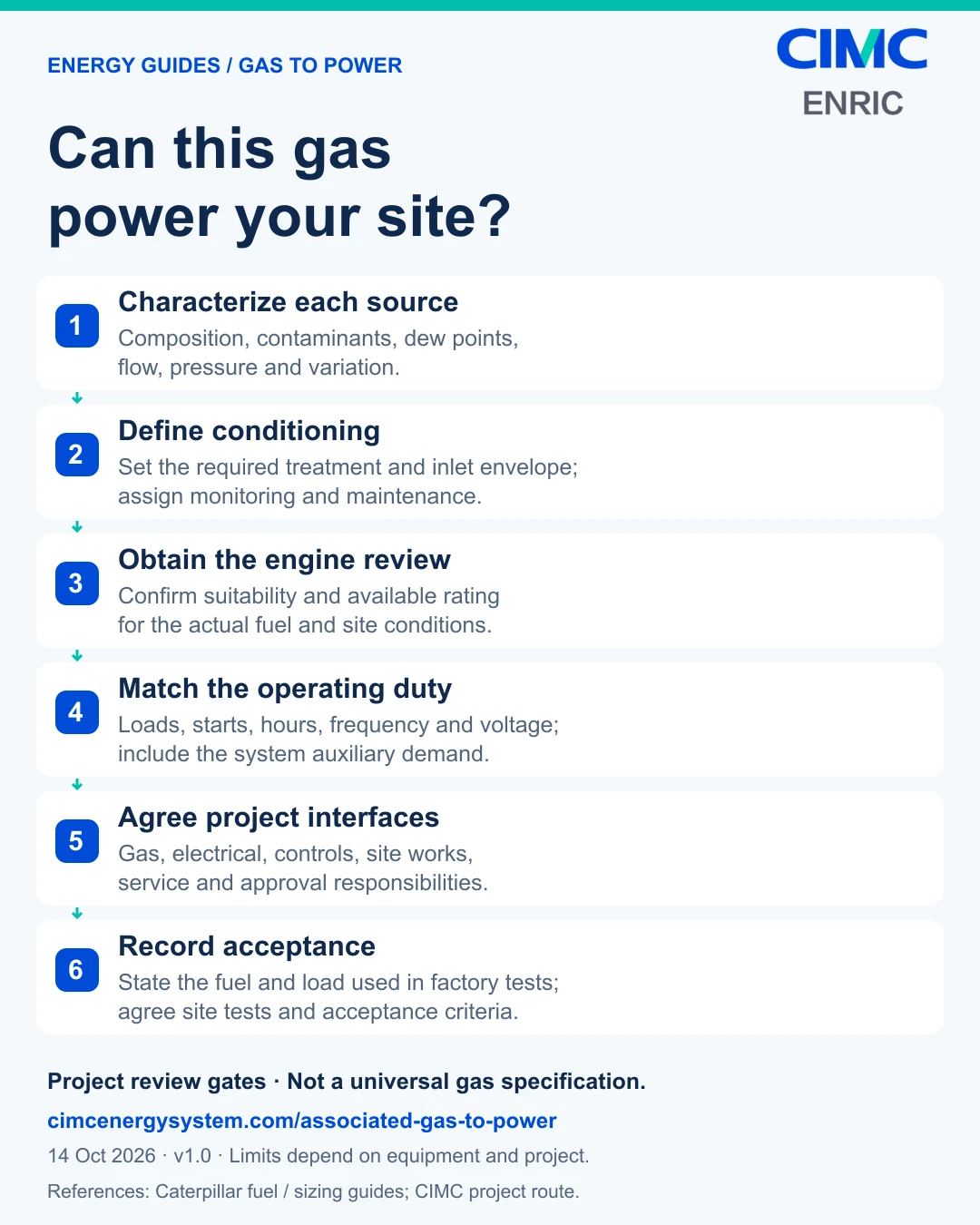
4. Match available fuel with useful site power
For a preliminary energy balance, use consistent reference conditions:
Gross electrical power estimate = gas flow × lower heating value × assumed electrical efficiency.
For example, assume 200 Nm³/h of dry gas referenced to 0°C and 1.01325 bar absolute, an LHV of 10 kWh/Nm³ at the same basis, and 35% electrical efficiency. The arithmetic gives 700 kW gross. If separately assumed auxiliaries consume 25 kW, the simplified net figure is 675 kW.
Every number in this example is hypothetical. It establishes neither a generator selection nor the output, efficiency or fuel consumption of AM600. Actual available output needs the selected engine's fuel and site assessment, generator characteristics, auxiliary loads and operating limits. Do not multiply several generic derating percentages and present the result as a guaranteed rating.
5. Review the load, climate and electrical duty together
Bring a load profile and identify the largest starts, abrupt load changes, essential loads, operating hours and acceptable interruption. Specify the site's required frequency—50 Hz or 60 Hz—along with voltage, power factor, parallel operation and future phases.
Application, duty and environmental conditions are all sizing inputs, and altitude and ambient temperature affect the available rating. Obtain the applicable site rating and cooling design for the proposed configuration.
For an oilfield or mine, our project discussion should also identify dust or corrosive exposure, access for service and the locally required protection and approvals. These are inputs to design, not claims that a standard package already satisfies a particular country's requirements.
6. Turn the proposal into an acceptance plan
Before placing an order, agree what will be demonstrated in the factory and what must be confirmed onsite with the actual fuel and loads. A factory test using another fuel does not establish performance on the customer's untreated gas.
Our suggested acceptance record links the fuel used, delivered output boundary, test load, operating conditions and exceptions. It should assign responsibility for conditioning, generator controls, switchgear, protection, commissioning, spare parts and ongoing fuel checks. Manufacturer commissioning procedures typically include fuel-analysis records; use the selected supplier's applicable procedure for the actual project.
7. What the CIMC project reference establishes
Our Nigeria associated-gas-to-power AM600 reference is identified as contract signed and under execution. It describes a customized package around two gas-source interfaces, generation and integration.
This is a useful starting point for discussing the complete gas-to-load scope. It does not establish commissioned runtime, verified savings or suitability for another customer's gas. Bring your own measurements so the proposed scope can be reviewed for your site.
Questions customers ask
Can we connect associated gas straight to a standard natural-gas generator?
Do not assume direct connection is suitable. Establish the source and inlet conditions, obtain the selected engine supplier's review and define any required conditioning. A fuel description or methane percentage alone does not replace that review.
Will a larger generator solve low-quality gas or a fluctuating supply?
A larger nameplate does not resolve an unsuitable fuel or establish stable supply. Review gas quality and availability, the engine's operating envelope and load changes together. Then assess the equipment, controls and any backup arrangement for the project.
Prepare your first project discussion
Use the downloadable gas-to-power checklist to collect the gas reports, supply records, load information, site conditions and proposed responsibilities. Mark missing values as not yet measured. A clear gap is more useful than an invented specification.
Explore our associated-gas planning route, oilfield energy solutions and customer question finder.
Discuss your gas-to-power project with CIMC ENRIC. Start with the available gas report, the application, country and required operating duty. Detailed drawings and sensitive operating records can follow through an agreed exchange process.
Prepared 14 October 2026. This guide provides a project-discussion framework. It does not imply supplier selection or approval of a CIMC configuration.
Technical reference · fuel properties
[1] Caterpillar, Gaseous Fuels — Application & Installation Guide (LEBW4977-12, 2022). Relevant sections: 2.2 (gas reference conditions), 2.3.4 (dew point), 3.2 (heating value) and 3.3 (methane number).
This manufacturer reference supports general engineering principles. Final fuel requirements and available output must be confirmed for the selected engine and actual project conditions. The reference does not indicate supplier selection or endorsement of a CIMC configuration.