OVERSEAS BRIEFING | EUROPE BIOMASS + STORAGE
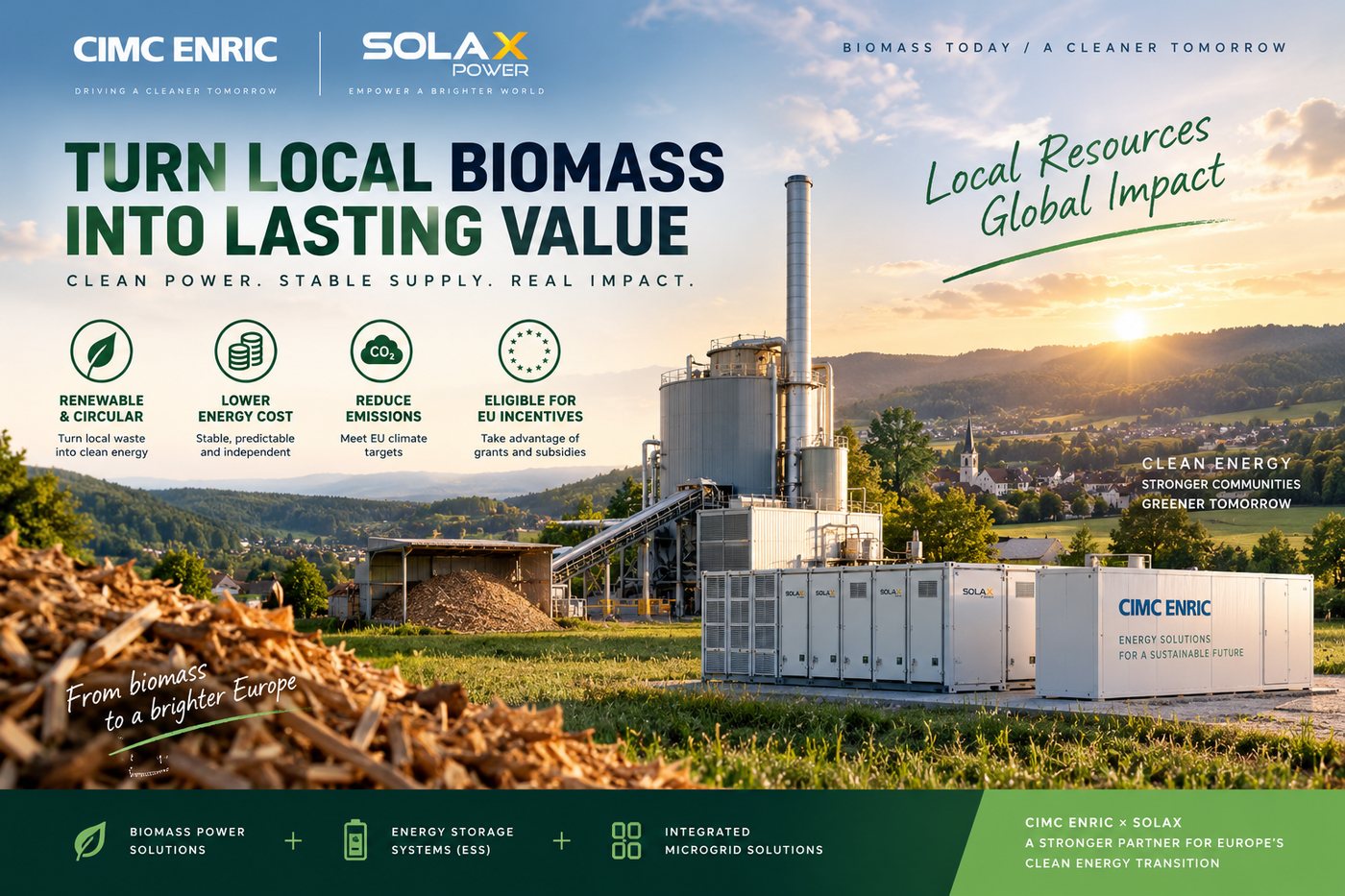
Turn local biomass into lasting value. Clean power. Stable supply. Real impact. From CIMC ENRIC Energy Systems.
Europe does not need another brochure that treats a battery as a power plant. Sites that already have local biomass or biogas have a firm, dispatchable fuel path. The commercial question is how to convert that fuel into lasting electrical — and, where heat has a buyer, thermal — value, and whether a short-duration energy storage system belongs on the same pad.
This briefing is for local partners first: biomass and biogas EPCs, agricultural biogas operators, district heat-and-power CHP owners, and storage integrators who will only sell the hours a battery can honestly cover. End owners with a known load and a known fuel can use the same map. CIMC ENRIC works with storage OEMs and local partners as needed. The offered stack is biomass power solutions + energy storage systems + an integrated microgrid — a duty-cycle match, not a poster.
Why talk now: EU and national frameworks are moving. The revised Renewable Energy Directive (RED III) sets sustainability and greenhouse-gas criteria for bioenergy and tells Member States how to design support. National renewable support schemes — auctions, premiums, tariffs, contracts for difference — are usually where a project actually meets money. ETS-backed instruments such as the Modernisation Fund (selected Member States; renewables, storage and district heating among priority areas) and the Innovation Fund (innovative renewables and energy storage among eligible themes) exist as named categories. None of that is an eligibility opinion, a euro figure, or a promise that your site will receive a grant. Treat incentives as an opener. Verify the national rulebook before anyone writes a number into a proposal.
1. Product box — keep the two jobs separate
The campaign line is simple: renewable and circular (local residue and waste into energy), more predictable energy cost, and lower emissions on a path that can support EU climate targets. The engineering line is stricter:
- Biomass / biogas → firm, dispatchable baseload. If the fuel is on site and the conversion plant can run, this is the always-on path. First-cut sizing: Project Calculator (firm fuel / baseload).
- BESS → about 3–4 hours of flexibility. Peak support, short shifting, bridging and microgrid stability — not multi-day fake baseload. Size that path on the Microgrid Calculator.
Do not sell a four-hour container as a replacement for a biogas engine or a biomass CHP island. Do not force a diesel “convenience tax” story onto a biomass site — diesel is not the villain of this briefing. This theater is fuel-to-power plus optional short storage, not an island diesel conversion.
2. Decision logic partners can share
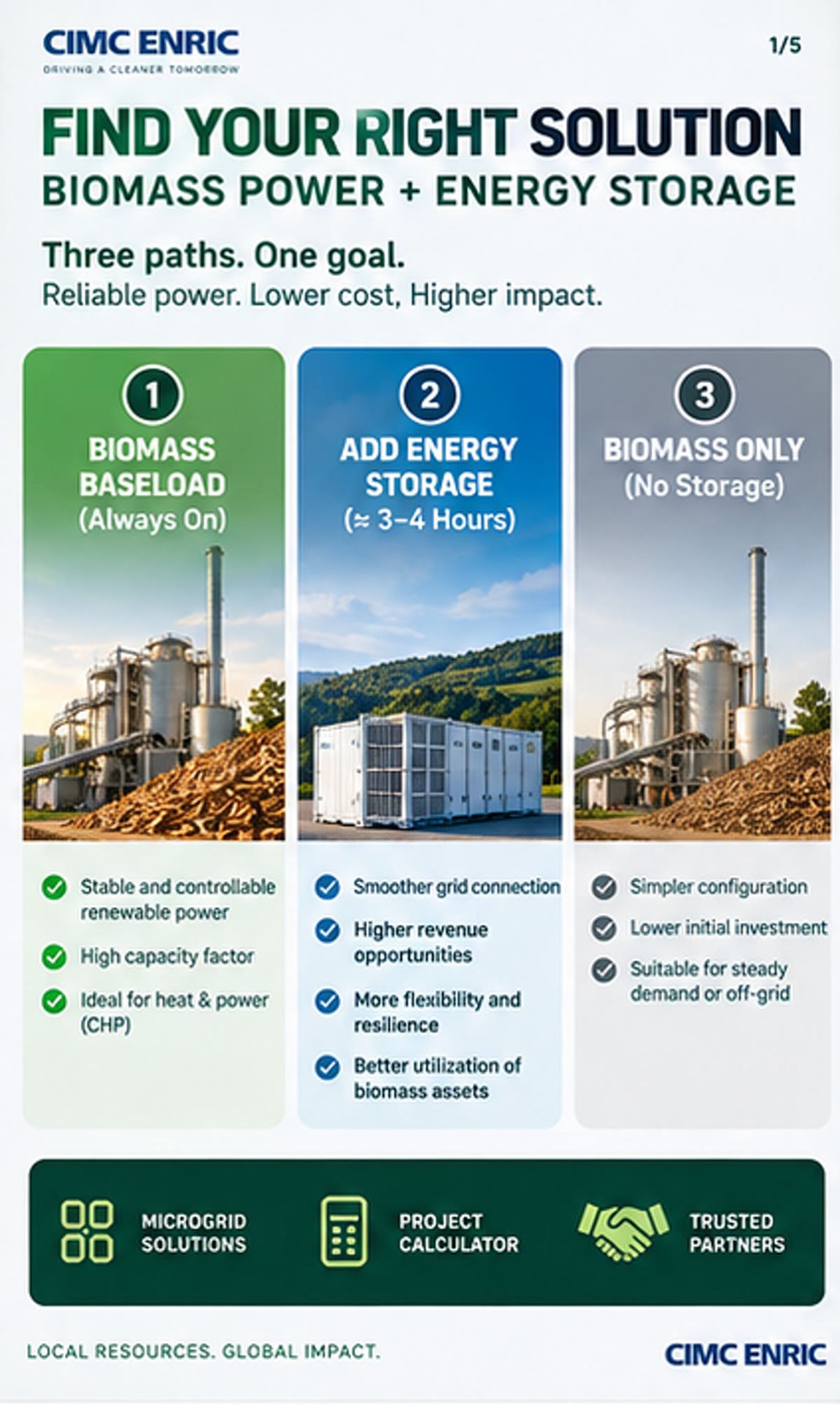
- Known load + biomass or biogas on site → firm fuel first. Lock electrical MW (and heat MW if this is CHP). The generator follows the fuel. The battery, if any, follows the hours you actually need to shift.
- Need flexibility of about 3–4 hours → add ESS. Typical reasons: peak clipping on a constrained feeder, bridging a short outage, time-shifting a slice of output, or stiffening a site microgrid. That is the storage partner’s job — not pretending the battery is the baseload plant.
- No storage owner, no storage sale. If the client will not own or operate BESS, do not force a microgrid. Offer biomass or biogas power on its own.
- District or industrial heat offtake → design as CHP, not power-only. Heat is often the bankable offtake. Do not hide it to make an electricity story look cleaner.
3. What the stack looks like
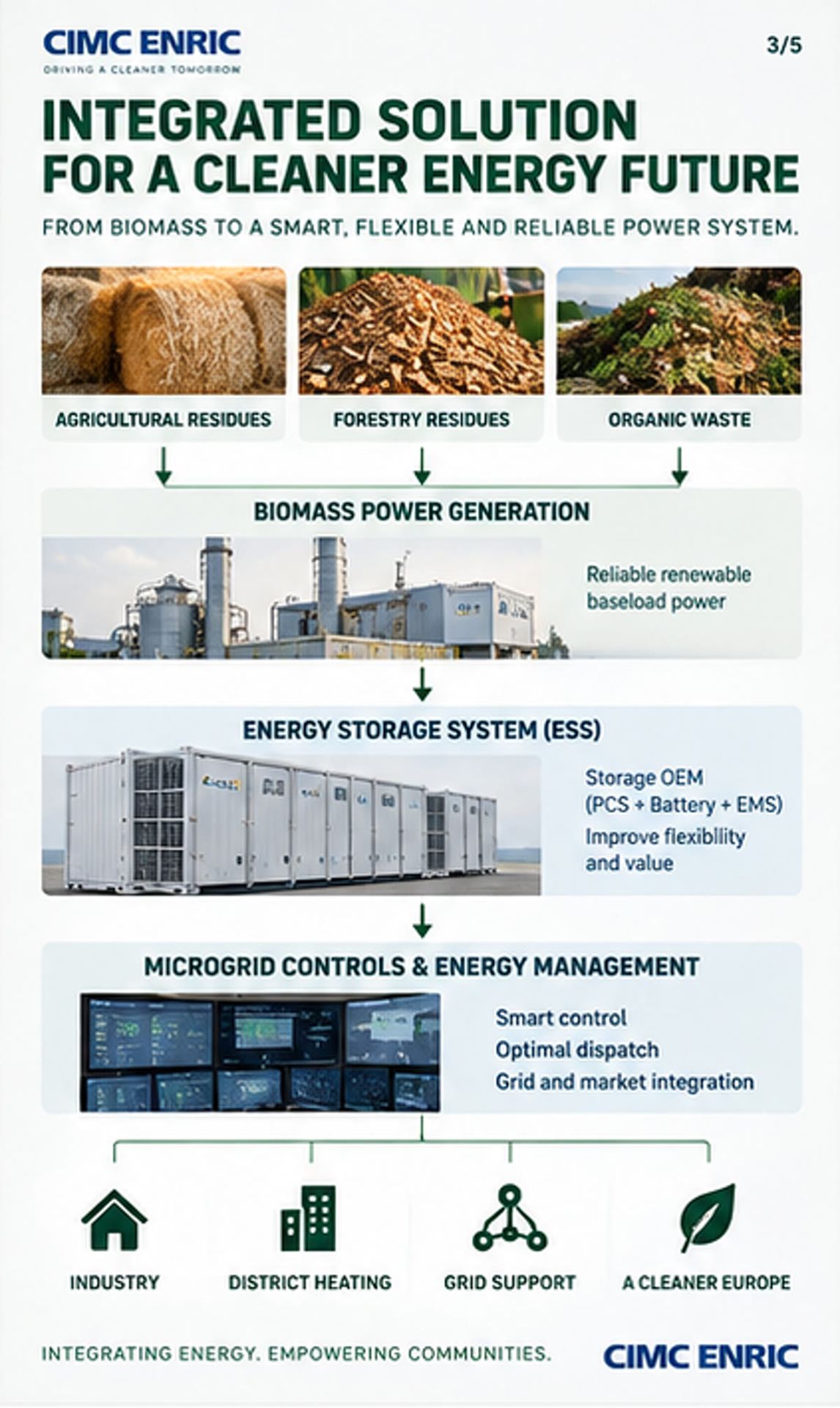
Most serious European conversations combine three layers — sized to duty cycle, not to a campaign image:
- Biomass power — solid biomass or biogas conversion to firm kW/MW, with CHP where heat has a buyer.
- Energy storage (ESS) — containerized short-duration storage, planned around about 3–4 hours.
- Integrated microgrid — controls that let the site run the two jobs without confusing them: fuel carries the hours; storage carries the short flexibility.
CIMC ENRIC is a useful partner conversation for Europe’s clean-energy transition only if those jobs stay honest. This draft invents no plant kWh, no IRR, no “typical payback”, and no case-study numbers. Local resources, global impact still has to clear a fuel log, a load curve and a national rulebook.
4. Owner and partner intake — four questions before any proposal
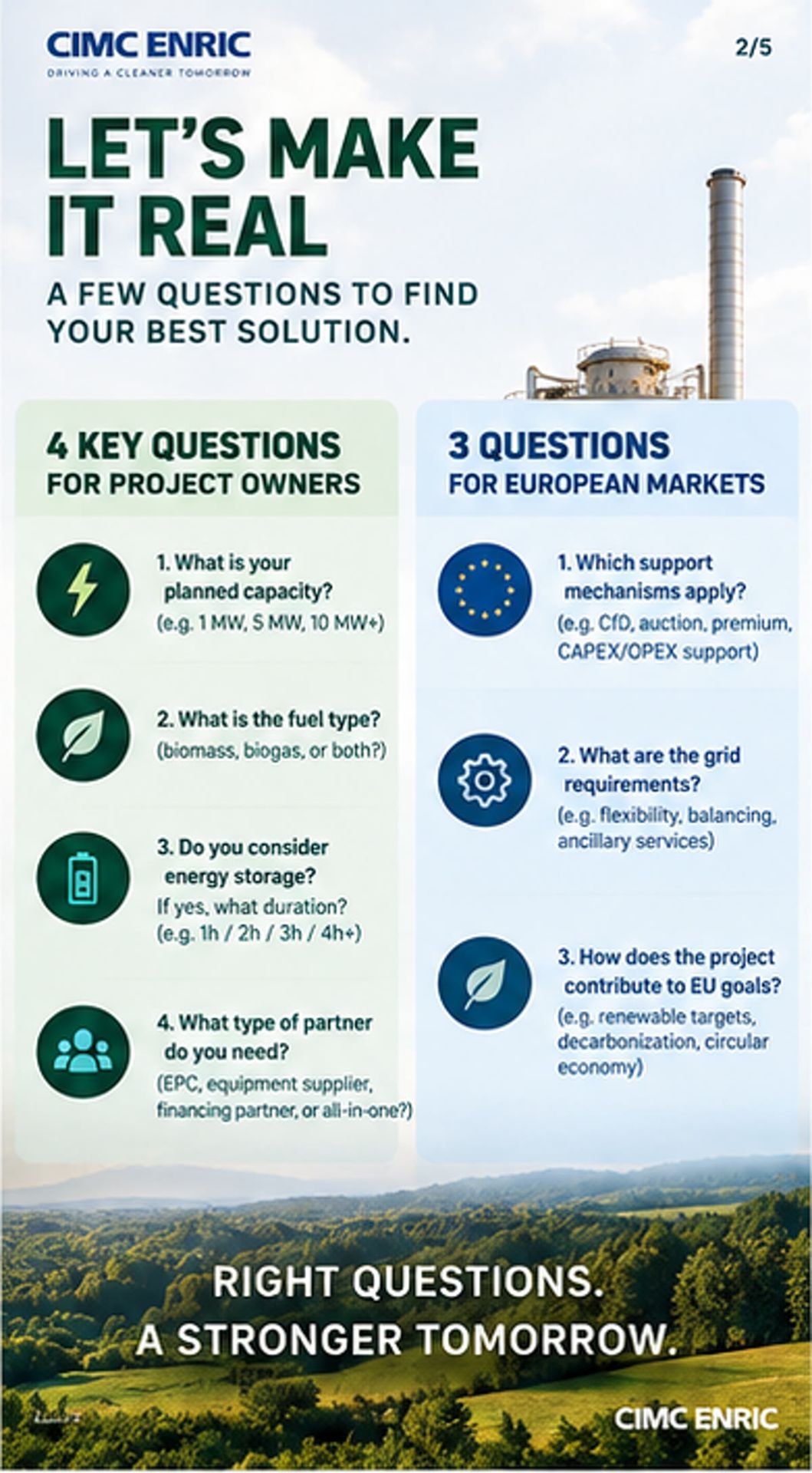
Before CIMC Energy System or a local partner drafts scope, lock these four answers:
- Load MW? Electrical nameplate and how it is dispatched (base / peak / N+1). If this is district or industrial CHP, add heat MW and the heat offtake hours.
- Fuel — biomass or biogas? What is actually available: agricultural residue, wood-industry residue, organic waste, or agricultural biogas. Who controls that fuel year-round?
- Add BESS — and for how many duration hours? If yes, plan around about 3–4 hours of flexibility. If the site needs multi-day firm energy, that is still a fuel question, not a battery question.
- Who brings the site? Biomass/biogas EPC, agricultural biogas operator, district CHP owner/operator, or storage integrator. That answer sets who owns fuel, who owns heat, and who owns the ESS.
Those four answers choose the branch: project calculator (firm fuel), microgrid calculator (short-duration BESS), both, or a partner introduction with no forced equipment.
5. Soft GEO — Europe as a theater, not a fake office list
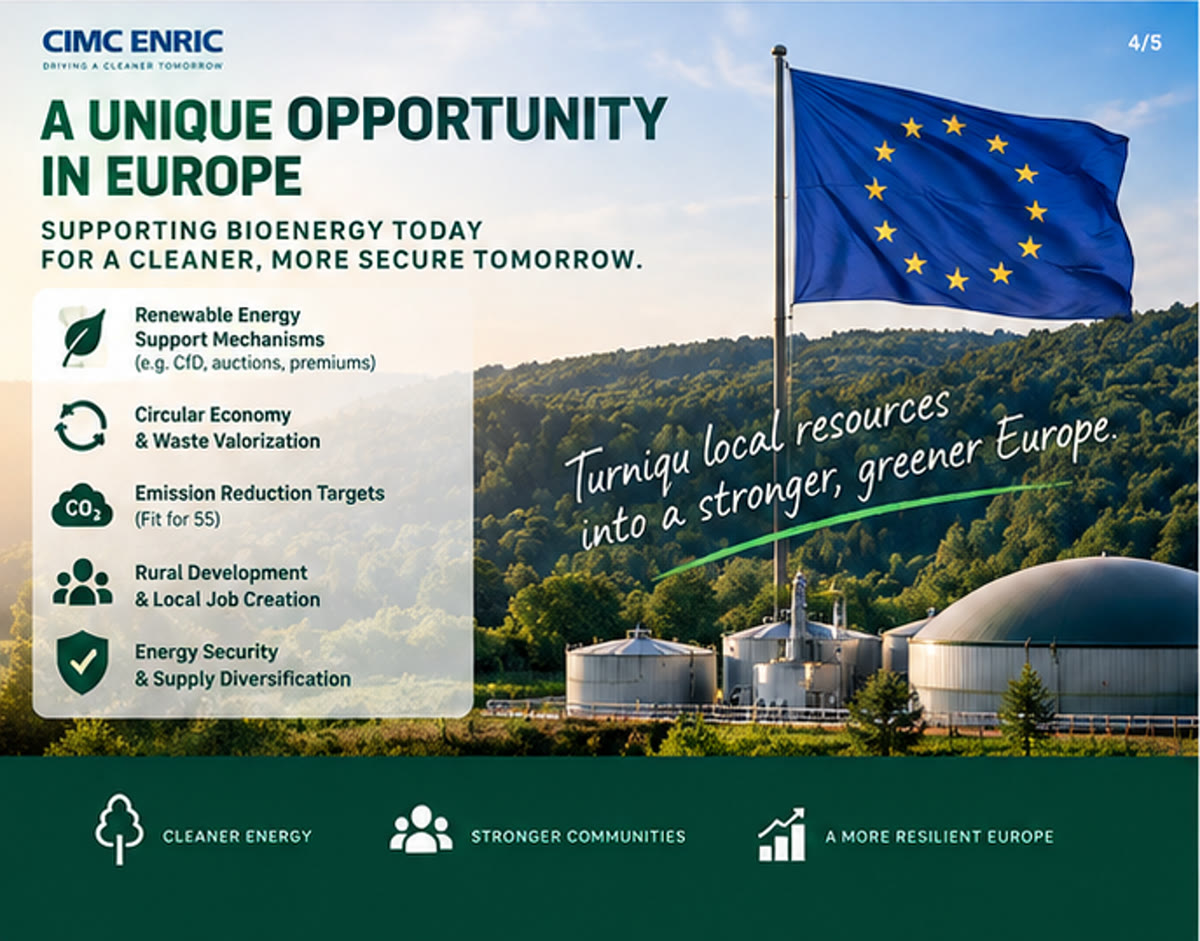
We do not claim offices or local teams we do not have. The repeating pattern is local fuel + local load + a national rulebook:
- Agricultural biogas operators who already have gas and want firm power, optional short storage, and a partner who will not oversell the battery.
- District CHP owners looking at renewable heat-and-power with a storage add-on for feeder or peak hours.
- EPCs and storage integrators who need a shareable decision tree instead of a subsidy rumour.
National support design — and RED sustainability criteria — decide whether a given feedstock and plant configuration can even enter a scheme. That is a national conversation, not a line item in this briefing.
6. Which door to open next
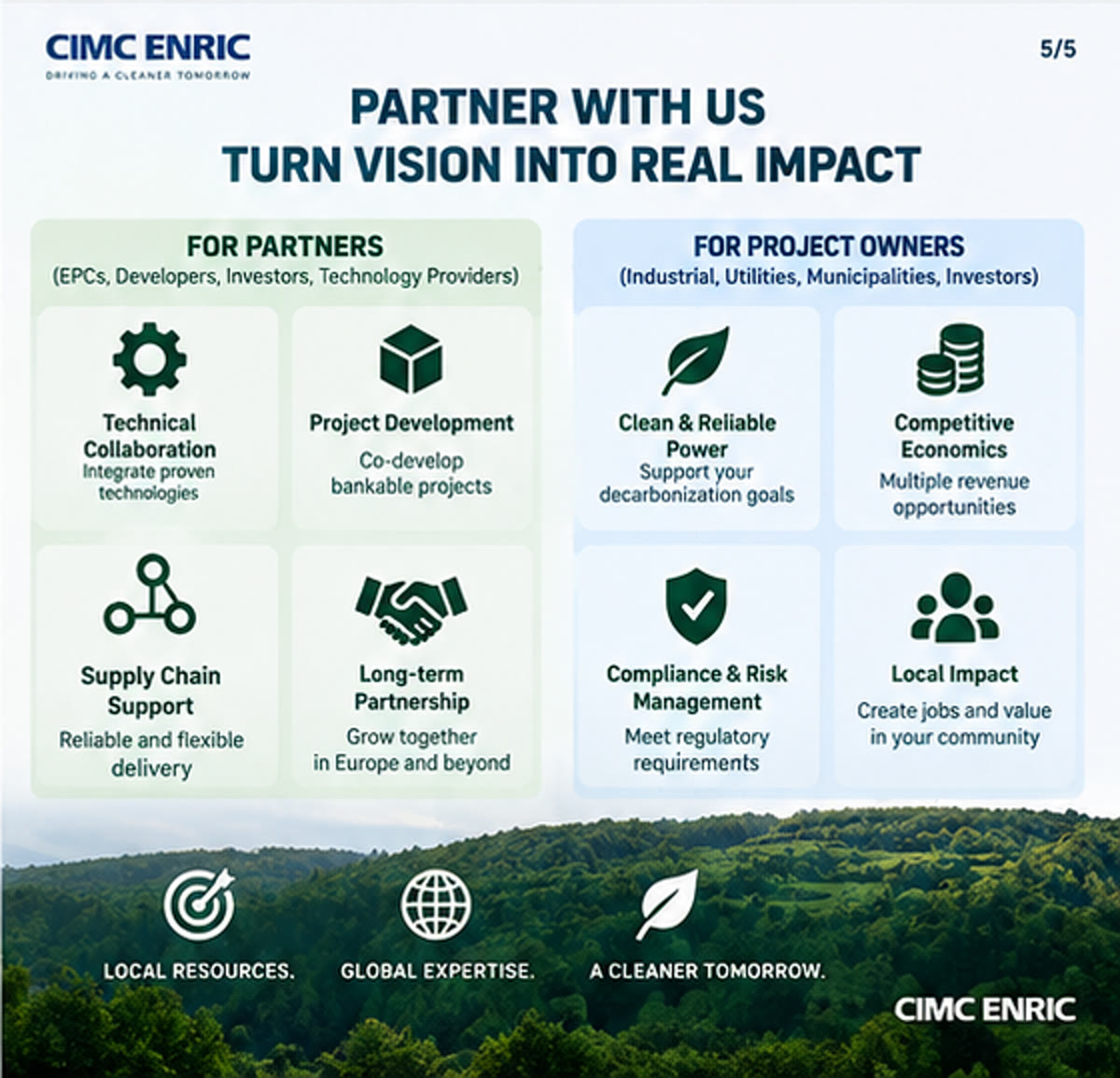
- Firm biomass / biogas baseload path: Project Calculator
- ~3–4 hour ESS / microgrid path: Microgrid Calculator
- Become a local partner (EPC, biogas operator, district CHP, storage integrator): Partners
- Discuss a live European site: Discuss your project
Field rule (keep this visible)
Biomass and biogas are the firm, dispatchable baseload. BESS covers about 3–4 hours of flexibility — not fake baseload. Do not invent subsidy euros or eligibility. Do not invent case metrics. Do not force diesel narratives onto a biomass site. CIMC ENRIC is a stack conversation: fuel-to-power + honest storage + microgrid controls — storage OEMs are partners, not an exclusive lock. Verify site inputs, feedstock sustainability and the national support rulebook before any investment decision.
CIMC ENRIC Energy Systems — Overseas Briefing. Content for partner and owner alignment. English primary. No invented case kWh, euro or eligibility claims in this draft.