
CIMC ENRIC Energy Systems · farm / agro-industry owner / biogas project developer / local EPC / energy partner
Compare routes against measured raw-gas supply and a credible customer for the final energy product. CHP needs a useful electricity and heat demand; upgrading needs a confirmed gas specification and delivery route. Neither option has a universal economic advantage. Start with the missing measurements and interfaces, then size the equipment.
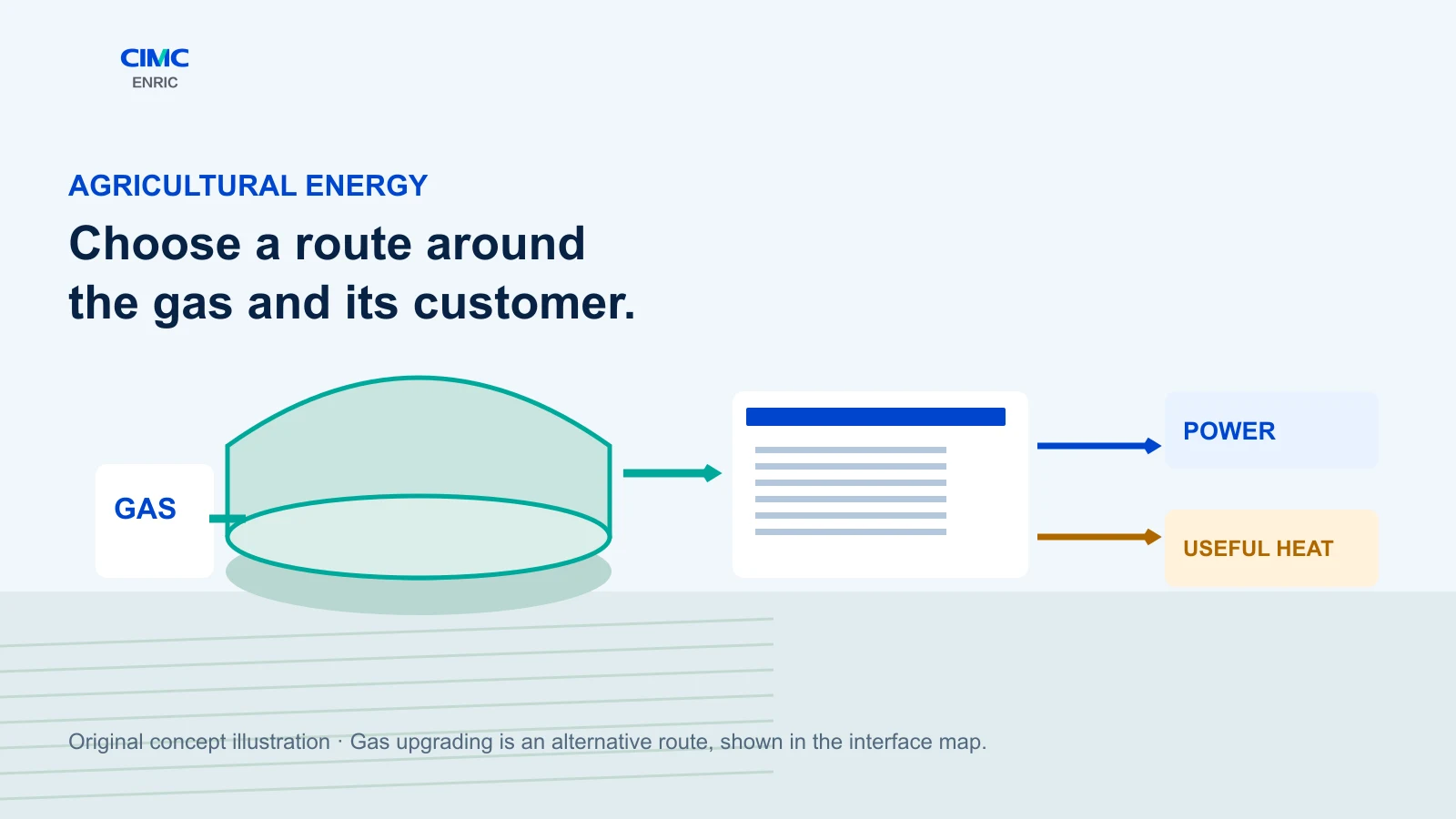
1. Separate the biological resource from the energy package
List the feedstocks, reliable daily quantities, seasonal changes and the existing digestion process. If the digester already operates, obtain measured gas flow and a dated analysis rather than relying on a design capacity. For a new facility, distinguish the process designer's gas-yield assumptions from equipment that consumes or upgrades that gas.
Anaerobic digestion produces biogas and digestate. The raw gas contains methane alongside carbon dioxide, moisture and other constituents; it needs assessment for its intended use.[1] Gas treatment and energy equipment do not independently guarantee feedstock supply, digester stability or the value of the digestate.
2. Test the on-site electricity and useful-heat case
Map electricity demand by time of day and season, including irrigation, refrigeration, processing and essential auxiliaries. Check whether the site can use the output, export it under an applicable agreement or curtail production. A weak grid creates a power problem, but it does not automatically establish the financial case for a particular generator.
For CHP, identify a heat customer: digester heating, hot water, drying or another compatible process. Record the temperature, return condition, hours and seasonal demand. Heat recovered by equipment is not necessarily heat the customer can use. Count only the usable portion after the recovery and distribution scope has been reviewed. Include any heat or electricity needed by the biogas plant itself.
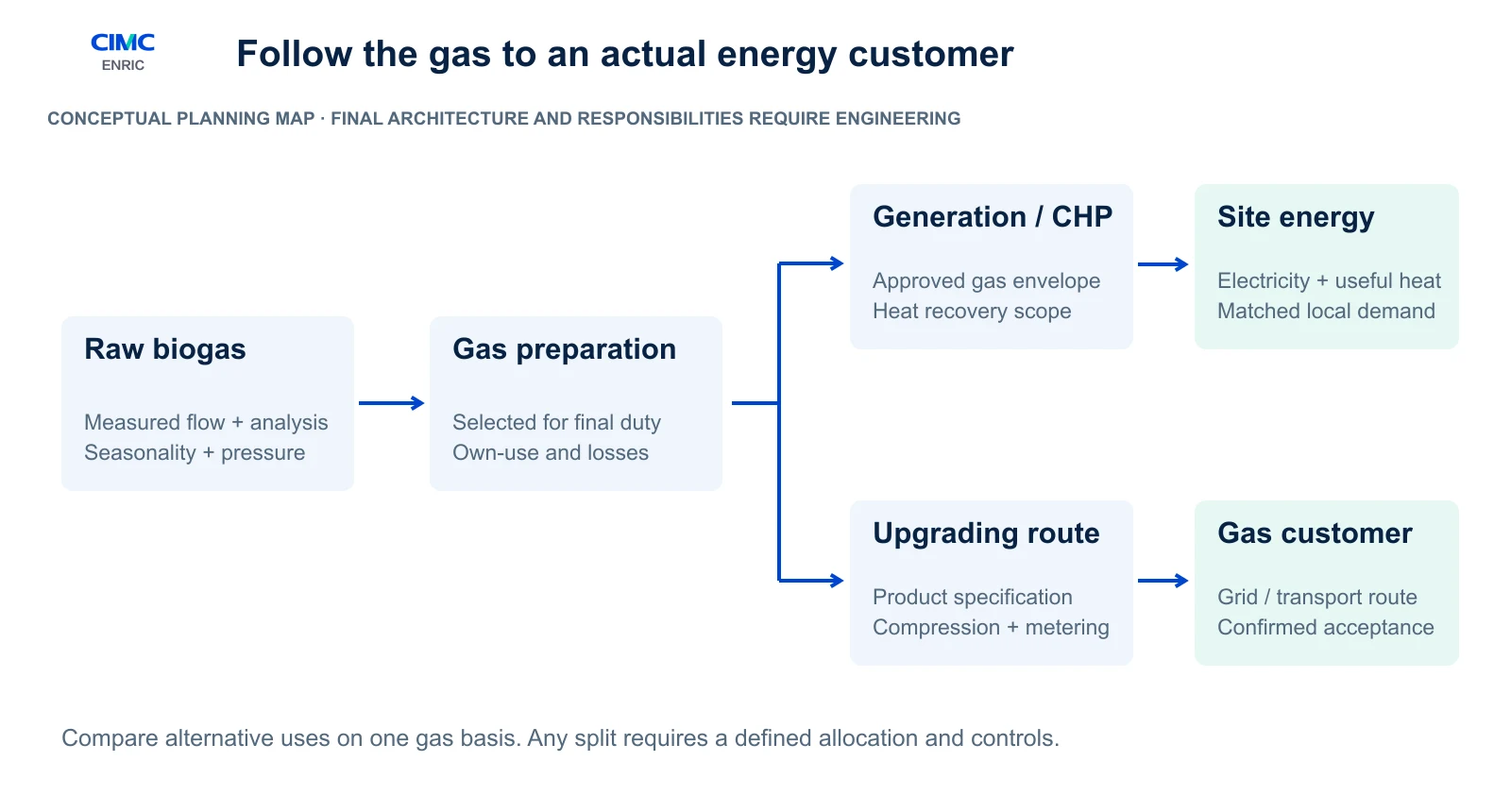
3. Confirm an offtake route before sizing upgrading
For biomethane, name the receiving customer or network and obtain its required gas quality, pressure, flow range, metering and acceptance conditions. A proposed pipeline connection, a vehicle-fuel route and compressed or liquefied delivery have different interfaces. Gas upgrading is only one part of that chain.
Review the gas-treatment sequence, drying, compression, measurement, storage and transport against the selected route. Ask how rejected gas, off-specification operation, methane losses and supply interruptions will be handled. Keep quoted purity, recovery and energy consumption tied to a stated feed-gas envelope and system boundary; a headline percentage alone cannot compare two packages.
4. Compare a consistent energy and commercial boundary
Use one representative period and one measured gas-resource basis. Show the gas allocated to generation or upgrading, electricity consumed internally, usable exported energy, useful heat, losses and downtime assumptions. A split-use design requires its own allocation and controls. Do not count the same cubic metre of gas as both sold biomethane and generator fuel.
Then add treatment consumables, maintenance, operator requirements, replacement parts, site works and the relevant connection or logistics costs. Compare the customer's actual electricity, heat and gas alternatives. Local incentives, sustainability certification, network rules and financing must be checked for the project country; this guide does not assume a subsidy or a guaranteed product price.
Use one interface or comparison register
| Decision input | On-site electricity / CHP | Biomethane route |
|---|---|---|
| Energy customer | Time-matched electricity and useful heat demand | Credible offtaker and delivery specification |
| Gas preparation | Engine-approved gas envelope and treatment | Required product quality and measurement |
| Site dependencies | Electrical connection, heat users, cooling and service | Compression / delivery access, utilities and approvals |
| Operating account | Fuel use, own-use demand, heat utilization and maintenance | Product gas, own-use energy, losses, logistics and maintenance |
| Evidence to close | Load profiles and engine / heat-recovery scope | Offtake terms, gas quality, delivery pressure and measurement |
5. Build a first phase that can be operated
An existing digester may need only a defined treatment or energy stage. A complete new project may need separate biological-process, gas-treatment, power, electrical and local-construction packages. The CIMC ENRIC agricultural-energy page outlines modular supply and local-integration routes. Confirm the equipment and integration responsibility for the actual order.
For phased delivery, reserve the required space and interfaces but purchase against the first justified duty. Document where later compression, upgrading or generation would connect, which utilities need expansion and who maintains the initial plant. A future module shown on a layout is not an agreed commissioning date or a guaranteed second-phase capacity.
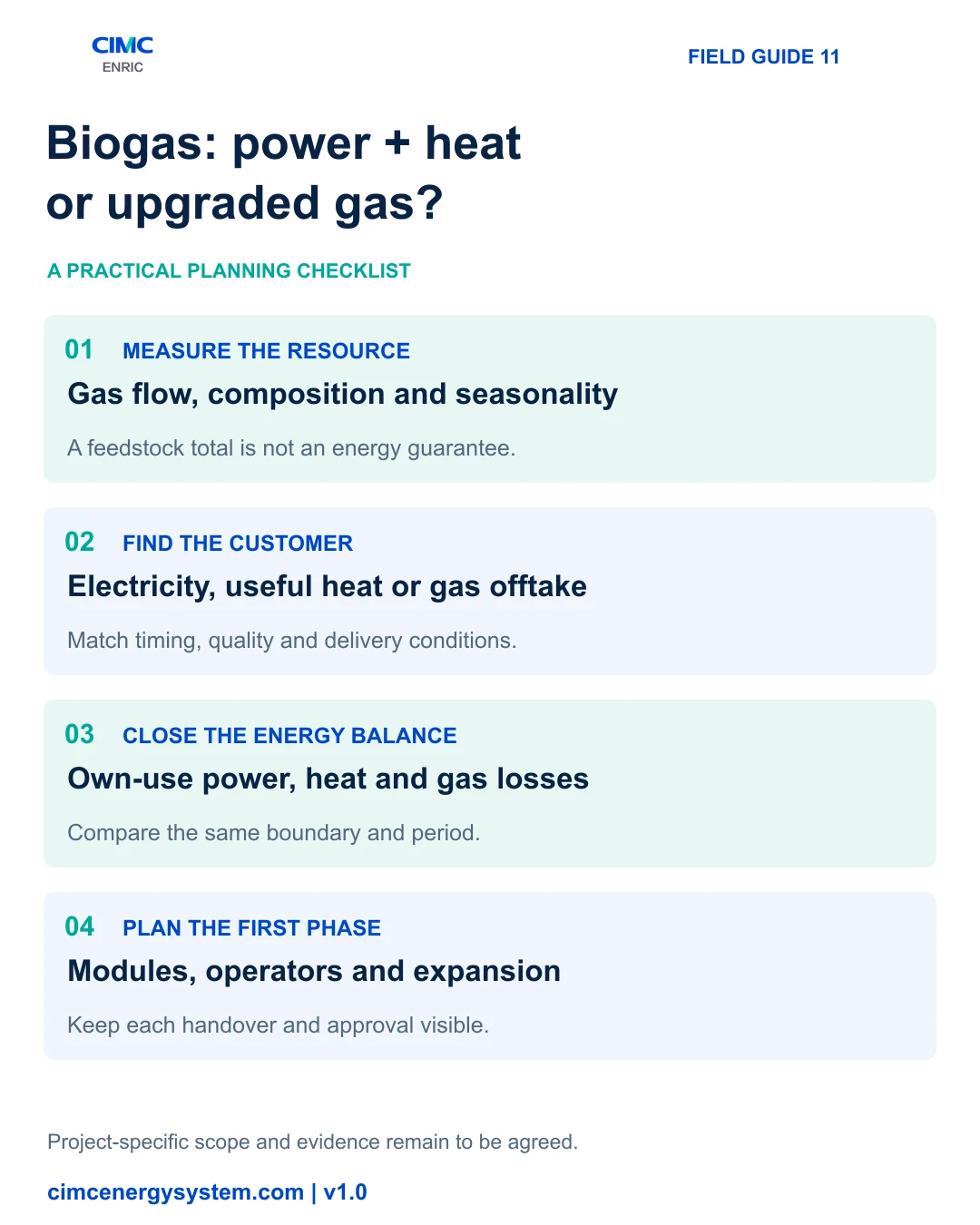
6. Define what the first assessment will deliver
A useful first engineering response should state the preferred route to investigate, the missing measurements, preliminary equipment boundaries and the questions for local approvals and delivery partners. It should explain which results remain conditional. That is a more practical starting point than choosing from an unexplained engine size or membrane capacity.
Complete the checklist with your process operator and potential energy customer. Attach the existing gas report, time-based flow record, electrical load and heat schedule, site layout and any offtake requirements. If a record is unavailable, mark it as an open item so the next study can resolve it.
Questions customers ask
Does a biogas generator always require upgrading to biomethane first?
No. The required treatment depends on the selected engine’s approved gas envelope. Cleaning, drying and other contaminant control still need assessment; full upgrading may be needed for a different downstream gas product.
Can we start with electricity and add biomethane upgrading later?
A phased route may be assessed. Confirm gas availability, the future offtaker, space, utility capacity, tie-ins and operating allocation before assuming the first phase can be expanded without changes.
Start with the project inputs
Download the fillable project worksheet and add your source records, responsible contact and open questions. No guessed technical values are required.
Discuss your project with CIMC ENRIC.
Related customer routes
- Biomethane and agricultural-energy capabilities
- Gas generation integration
- Gas-processing factory route
- Discuss a gas-resource assessment
References and scope
- [1] U.S. EPA: digestion outputs and biogas uses
- [2] U.S. Department of Energy: useful heat and CHP concept
The references support general process concepts. Route comparison and input lists are planning guidance, not a feasibility study or a product performance claim. No country-specific compliance conclusion or incentive is assumed.