
CIMC ENRIC Energy Systems · data center developer / EPC / design consultant / critical facilities operator
Define the IT load, availability objective, site energy and cooling conditions, and expansion phases before fixing equipment quantities. Power, cooling, buildings and controls must share one interface register and an agreed commissioning plan. A modular delivery method helps organize the work; the completed facility still needs project-specific engineering and acceptance.
1. Define the IT service before the equipment list
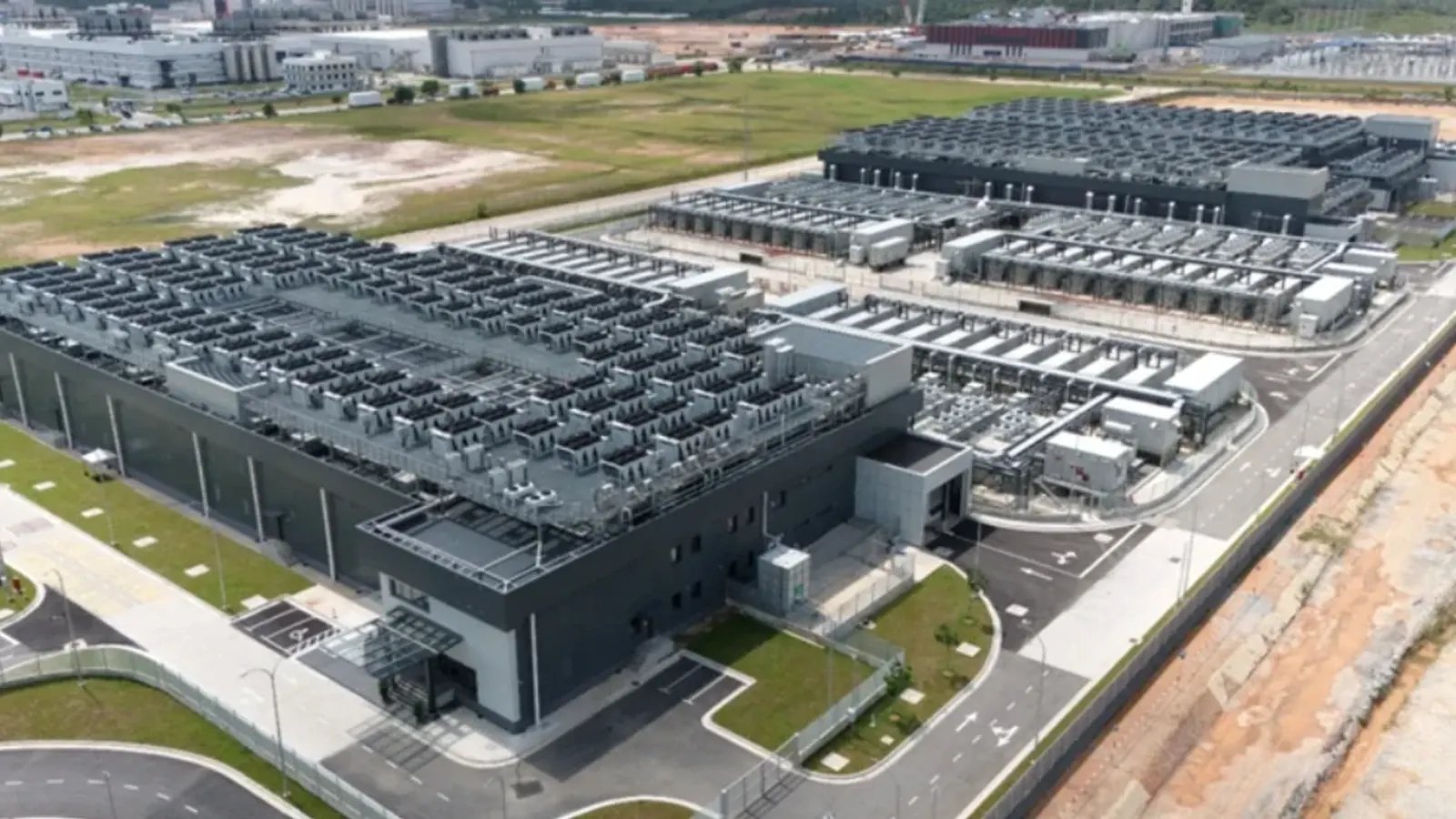
Start with the business requirement for the first operating phase and the planned expansion. Record initial and ultimate IT demand, rack count, expected rack density, load growth and the accepted maintenance policy. Identify the parts of the service that must remain available, rather than starting with a generator count or a container layout.
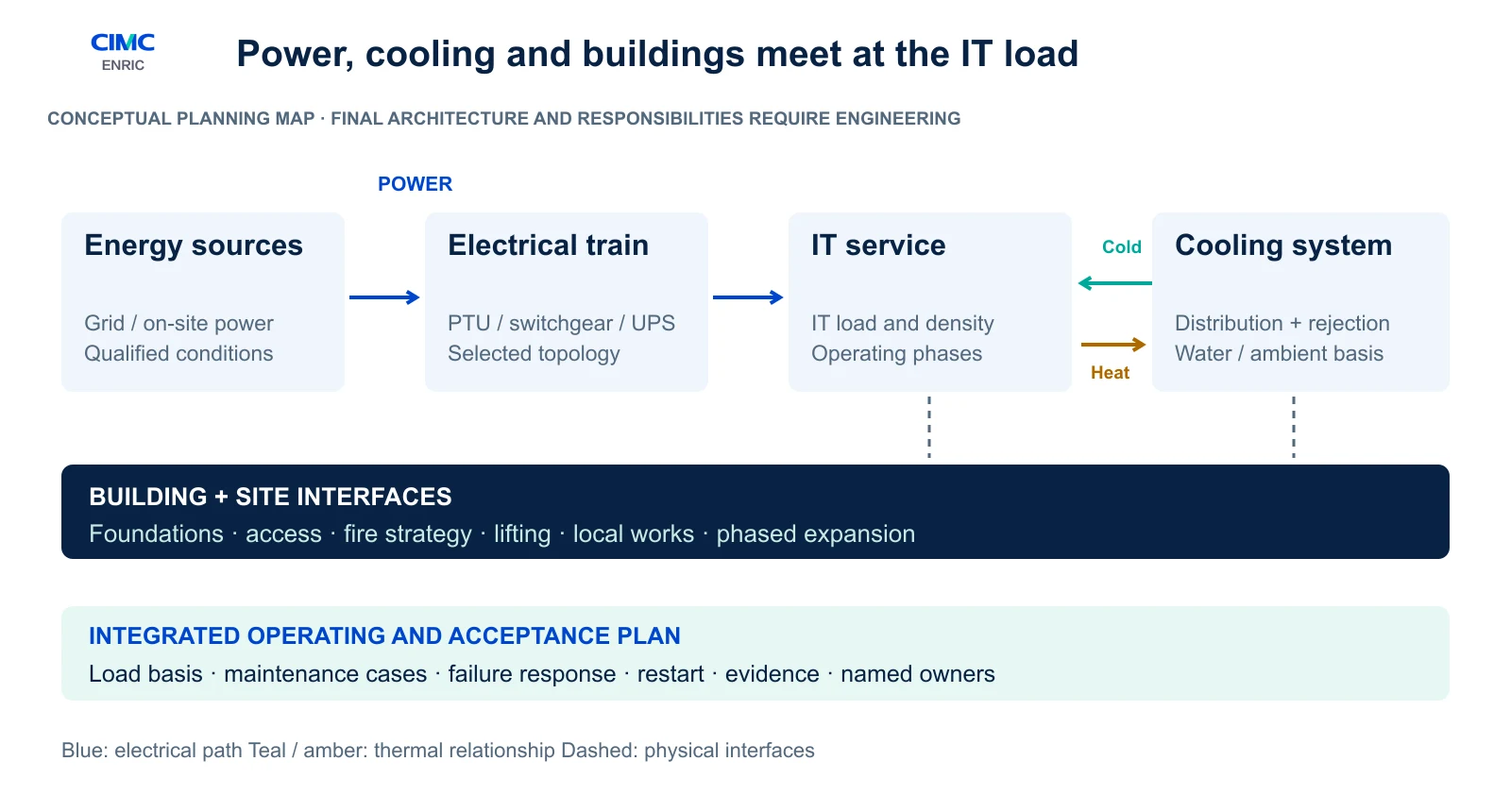
IT power is only one part of the site load. Cooling, pumps, fans, power-conversion losses, lighting and controls also consume electricity. Ask the designer for a phase-by-phase load basis that shows normal operation, commissioning, maintenance and the agreed abnormal cases. Avoid turning an aspirational efficiency target into the assumed electrical connection requirement.
2. Assess grid-constrained phases as an operating system
If the utility connection is delayed or limited, compare a temporary phase, a long-term on-site supply route and a later grid-connected mode. Each route needs its own fuel logistics, operating permission, emissions assessment, local service and transition plan. A gas delivery promise and a generator rating do not establish the permitted or reliable site supply.
For gas generation, request qualified inlet conditions, available output at the actual climate and altitude, operating-duty limits and the reserve needed during service. BESS and UPS functions must be defined separately: energy shifting, ride-through and recovery have different requirements. State which loads each system supports and for how long under the selected design conditions.
3. Make cooling part of the energy brief
Provide the IT equipment's cooling requirements, rack heat distribution, expected supply and return conditions, ambient design basis and water constraints. Review air cooling, chilled water and liquid-cooling interfaces against the actual IT equipment. A liquid-ready room or an equipment label does not confirm compatibility with every server or coolant circuit.
Trace the complete heat-removal route, including heat rejection outside the hall. Confirm pump and fan power, controls, isolation, leak management, maintenance access and the sequence after a power interruption. The question is how the cooling system follows the IT service through each operating mode, as well as its nominal capacity.
4. Specify redundancy through real operating cases
Ask what remains available when a component is isolated for planned maintenance and when an agreed failure occurs. Check distribution paths, shared controls, fuel supply and cooling dependencies alongside spare equipment. The same spare-unit count can sit inside very different site architectures.
Uptime Institute distinguishes infrastructure objectives and assesses the applicable design or facility for Tier certification. An N+1 equipment count alone is not a Tier award. If certification is required, state the assessment scope, responsible assessor and evidence deliverables in the project brief.[2]
Use one interface or comparison register
| Boundary | Questions to close | Required project record |
|---|---|---|
| Source → power train | Available capacity, site output, fuel continuity and protection | Load basis, single-line diagram and source conditions |
| Power → cooling | Which pumps, fans and controls remain powered in each mode? | Electrical schedules and cooling restart sequence |
| Cooling → IT | Rack heat load, fluid conditions, distribution and water quality | Thermal design basis and approved IT interfaces |
| Module → building/site | Weight, lifting, foundations, fire separation and access | BIM/interface drawings and local design approvals |
| Controls → operator | Alarms, time stamps, settings access and escalation | Signal list, access roles and handover procedures |
5. Use modular delivery to close handovers earlier
CIMC Digital Power's published route combines factory prefabrication with site assembly. In an overseas project, review the module dimensions and weights, transport route, lifting plan, foundations, local approvals, cable and pipe connections, and the site works that must be ready before arrival. Name the supplier, local EPC and owner responsibilities in the same register.
Keep capability attribution clear. Data hall, power and cooling modules may come from different CIMC businesses or qualified partners. The existing data center capability page is a starting point for scope discussion, rather than evidence that every component is manufactured by one entity or covered by one standard configuration.
6. Agree integrated acceptance before signing the scope
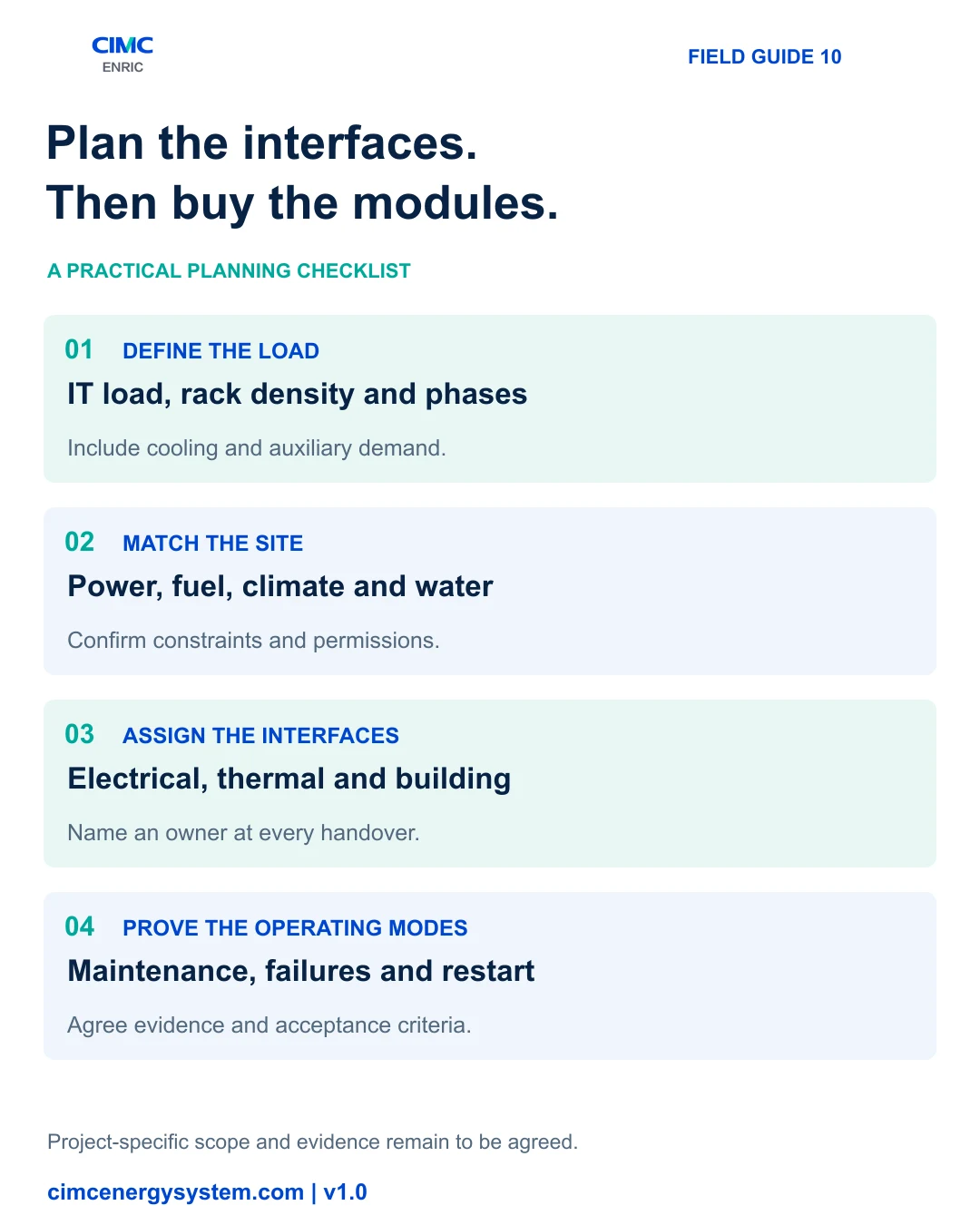
Factory inspections can cover the contracted modules, records and defined functional demonstrations. Site acceptance also needs the installed utility, fuel supply, cooling distribution, IT-load representation and operating procedures. Agree which failure, recovery and maintenance cases will be demonstrated, the initial conditions and the acceptance limits before procurement.
Request the final drawings, settings register, test evidence, training, spare-parts scope and service escalation route. For a phased campus, retain an expansion interface schedule so the next phase does not depend on an unrecorded assumption in the first. Use the worksheet below to collect the open items for the first engineering discussion.
Questions customers ask
Can gas generation support a data center before the grid connection is ready?
It can be evaluated as a project route. Confirm the operating permits, fuel continuity, qualified site output, reserve, UPS and cooling interfaces, emissions and local service before making a supply commitment.
Does N+1 equipment mean that a data center is Tier III certified?
No. Equipment redundancy is one design input. The required topology, maintainability and certification scope need separate assessment; a certification claim needs an actual applicable award.
Start with the project inputs
Download the fillable project worksheet and add your source records, responsible contact and open questions. No guessed technical values are required.
Discuss your project with CIMC ENRIC.
Related customer routes
- Data center infrastructure capabilities
- Modular data center factory profile
- Modular gas generation
- Project engineering discussion
References and scope
- [1] CIMC Digital Power: modular delivery method and business attribution
- [2] Uptime Institute: Tier objectives and certification context
Planning guidance synthesized for the buyer interfaces above. No Tier certification, efficiency value, schedule reduction or uptime is claimed for a proposed project.