

For: EPC buyers, project owners, dealers and factory inspectors
A meaningful factory acceptance test begins with an agreed test plan and project specification. Buyers should check equipment identity, documentation, operating data, protection responses, load tests and the handling of exceptions—then distinguish factory results from site acceptance.
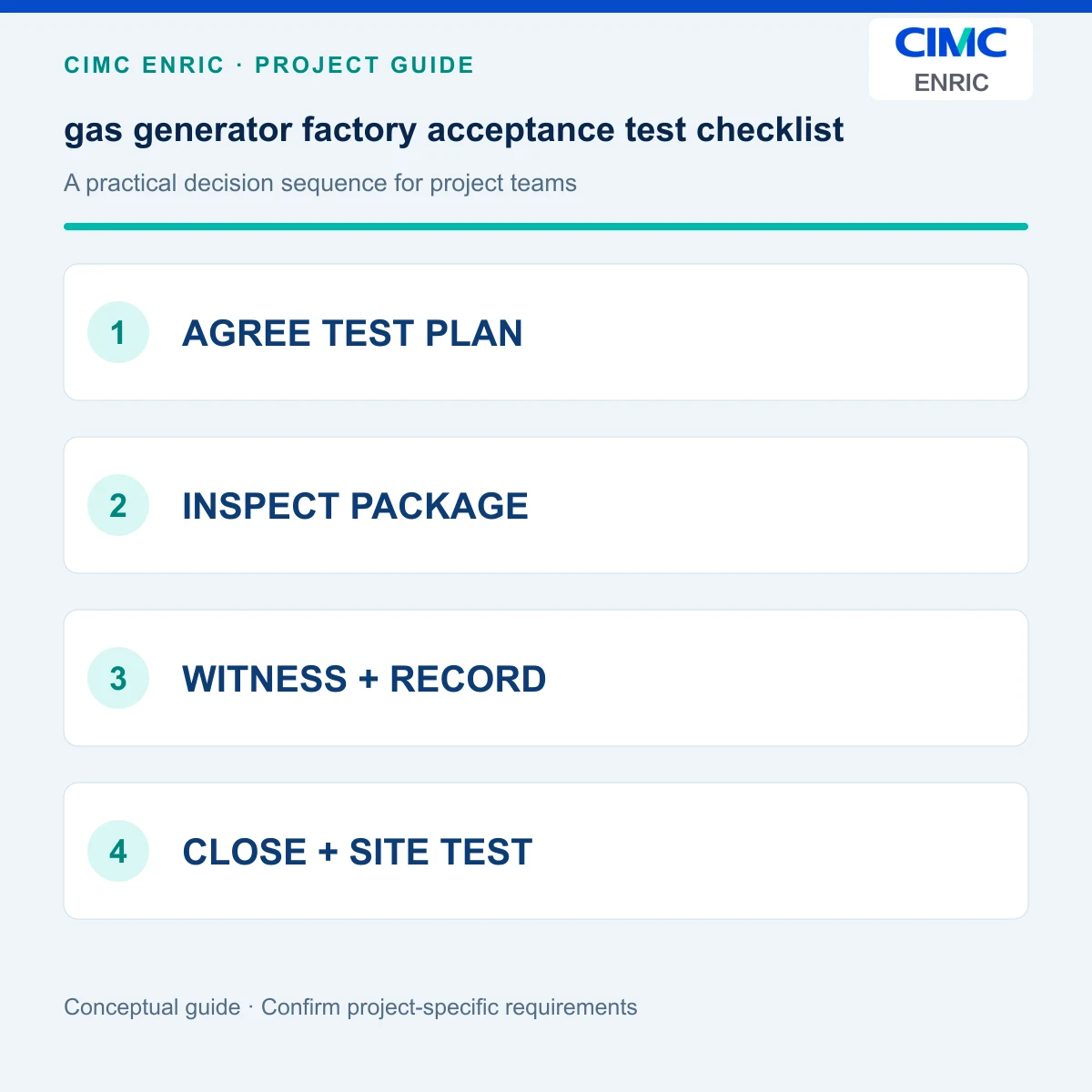
Agree the scope before arriving
Confirm the exact build, serial numbers, approved drawings, fuel available at the factory, electrical configuration, instruments, calibration, acceptance limits, test witnesses and document list. State any difference between the factory fuel or ambient conditions and the final site conditions.
The factory test can verify the agreed assembly and test conditions; it cannot automatically prove site output, local emissions, a multi-unit microgrid response or fuel consumption under every future operating condition.
Inspect the package and documentation
Match the enclosure, identification plates, wiring, gas connections, safety labels, access clearances and control panel to the approved scope. Review the bill of materials, applicable component certificates, as-built drawings and operations and maintenance documents.
For a packaged system, clarify the location of each boundary: the generator, external gas conditioning, pressure regulation, electrical switchgear and remote communications may be supplied by different parties.
Witness operation and protections
Use the agreed procedure to record starting, steady-state operation at defined load points, electrical readings, fuel conditions and alarms. Where included in the plan, witness load-step behavior, emergency shutdown and protection functions using safe, controlled methods.
Record test instruments, actual conditions, acceptance criteria, readings and any deviation. An emergency-stop check and a simulated overspeed test are different activities; the test method must be agreed and conducted by authorized personnel.
Close findings and plan the site test
Each exception should have an owner, corrective action, completion evidence and acceptance status. Agree whether documents are controlled copies and how remote witnesses can review videos or records. A virtual review should support traceability, not imply that a buyer personally witnessed a test they did not attend.
Site acceptance still needs local installation, gas quality, foundations, electrical and safety interfaces, protection coordination and the actual operating environment. The published AM600 factory record is a product-specific reference; another configuration requires its own approved test plan.
Questions buyers ask
Does FAT mean the equipment is ready to energize on site?
No. Delivery inspection, installation, site checks, permits and commissioning are separate.
Can FAT be reviewed remotely?
A project can arrange remote review of controlled records or live tests, subject to agreed access and acceptance procedures.
Prepare a project brief
Approved specification; identity; drawings; test gas; load points; instruments; protection tests; exception log; controlled documents; site acceptance boundary.
Explore related CIMC solutions · Read the related project guide · Discuss your project
Source: CIMC ENRIC: AM600 factory acceptance reference. The cited material provides context; project decisions require current site-specific engineering and applicable requirements.